
Help Centre › Communication
Reminders & letters
Bring clients back when they are due, and send letters and emails that look like they came from your practice.
Reminders bring patients back on schedule — vaccinations, parasite control, medication reviews. This topic also covers one-off letters and texts.
Setting a reminder#
Reminders are usually set during a visit. A consultation or a hospital or boarding stay can carry several — a recheck in a week and a booster in a year are two separate reminders.
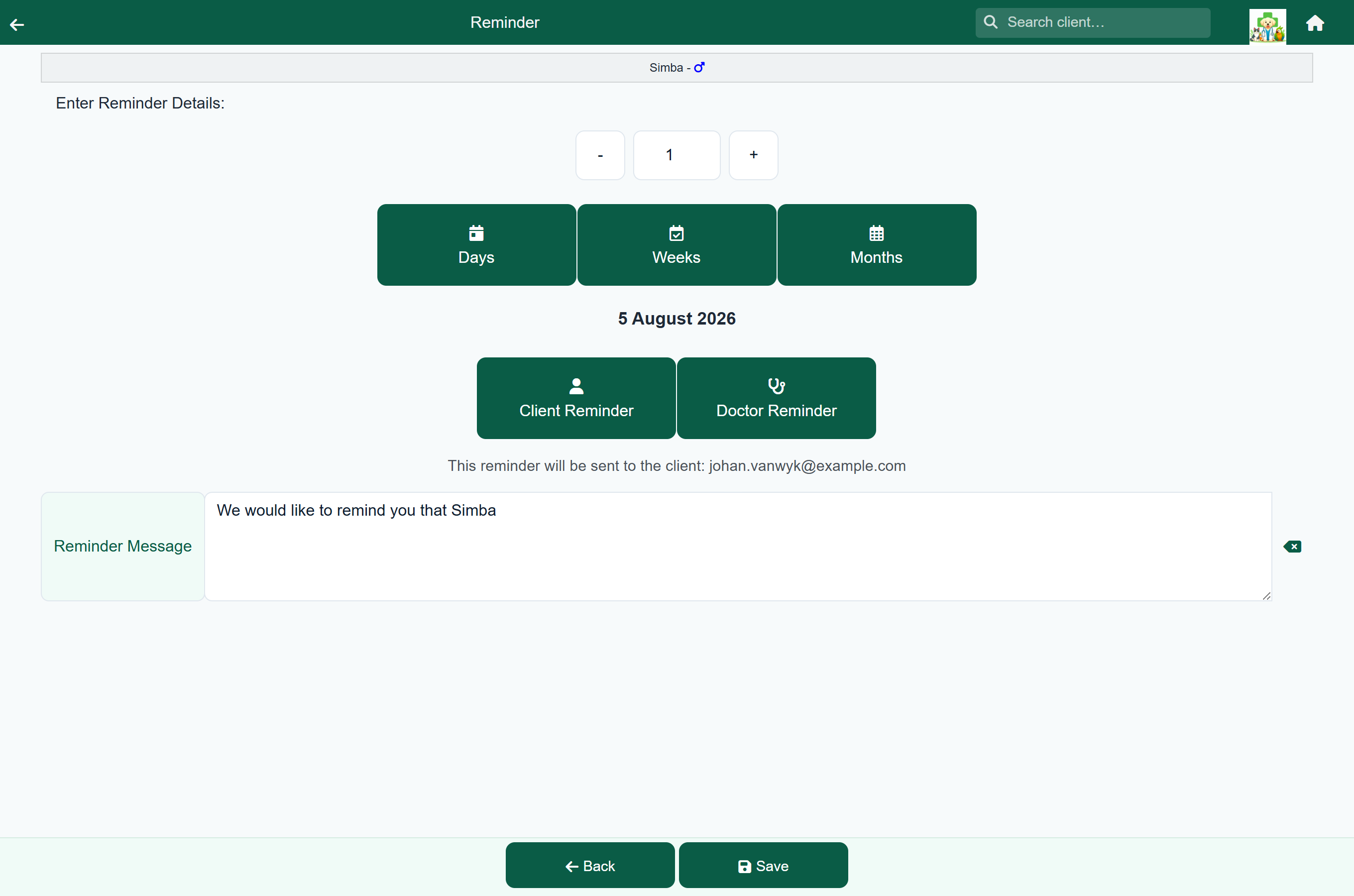
- In a consultation, press Reminder in the footer. On a hospital or boarding stay, press Add Reminder in the Stay Summary.
- Set when it falls due: enter a number and choose Days, Weeks or Months. The date is shown underneath.
- Choose Client Reminder or Doctor Reminder.
- Type the Reminder Message — this is what the client reads.
- Press Save.
| Choice | Who it is for | When it falls due |
|---|---|---|
| Client Reminder | The owner. | FastVet emails and/or texts the client, if automatic reminders are switched on. |
| Doctor Reminder | The vet who set it. | The email goes to you, not the owner, and it is never sent as a text. Use it for your own follow-ups, such as “chase the histology”. |
The line under the two buttons shows exactly who the current choice will reach.
When a reminder falls due#
- If automatic reminder emails are switched on, FastVet emails the client. For a business account it goes to the contacts ticked Receives reminders, or to the business itself if nobody is ticked.
- If text reminders are switched on, it also sends a text: the message the vet typed, followed by your practice name and phone number.
- Reminders stop for a patient marked deceased.
Sending a letter#
Home›Settings›Send Letter
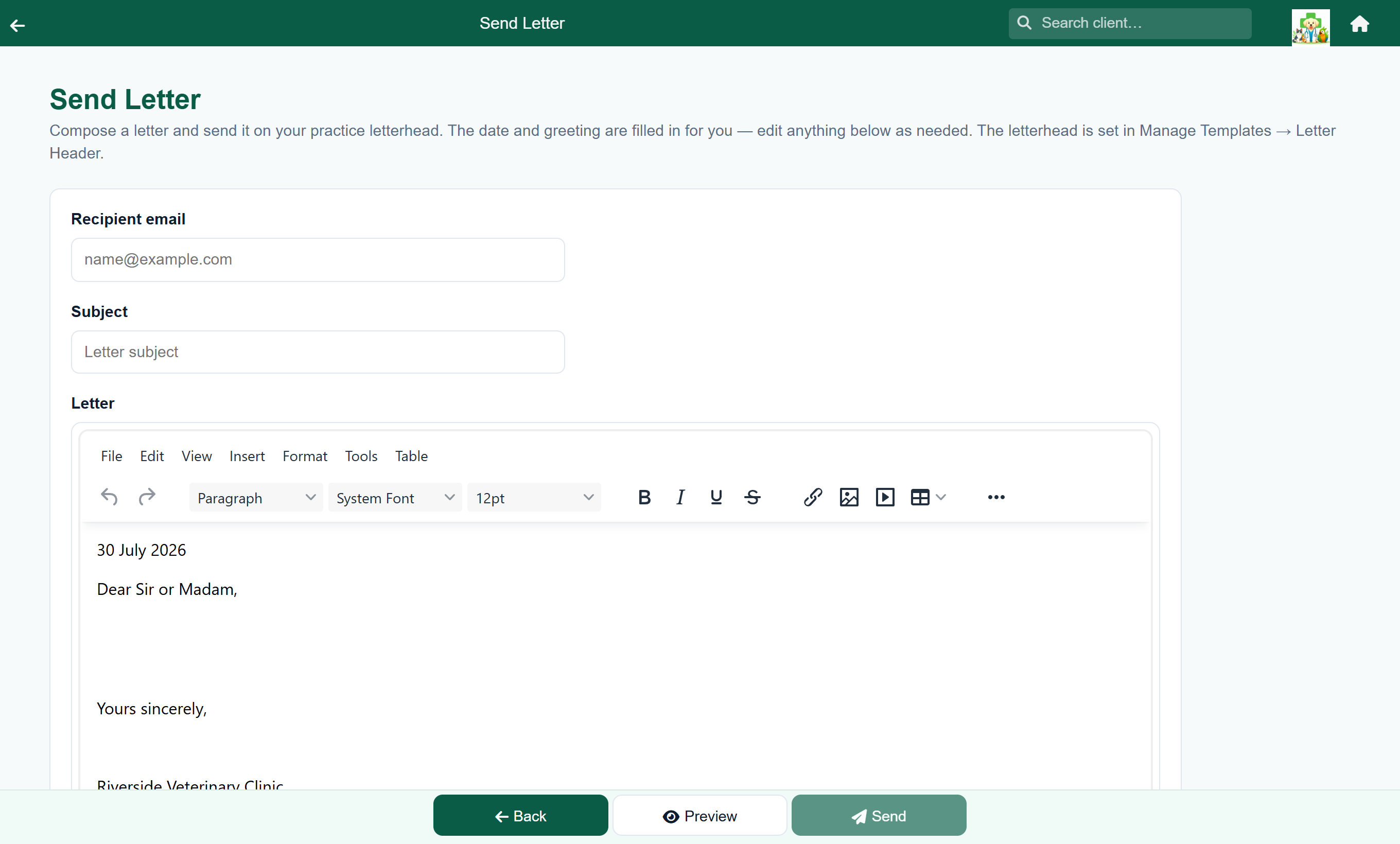
- Choose Send Letter.
- Type the Recipient email and a Subject.
- Write the letter. Today's date, a greeting and a sign-off in your practice's name are filled in already — edit any of them.
- Press Preview to see it on your letterhead, then Send.
From the Settings menu the letter goes to any address you type, so you can write to people who are not clients — a breeder, a shelter, another practice. To write to a client, open their account and press Letter: the address is filled in, the greeting uses their name, and the letter is recorded in the email history under their name.
The letterhead is your Letter Header, or your Referral Header if the Letter Header is blank.
Texting a client#
Home›Search Client›a client›Send Text
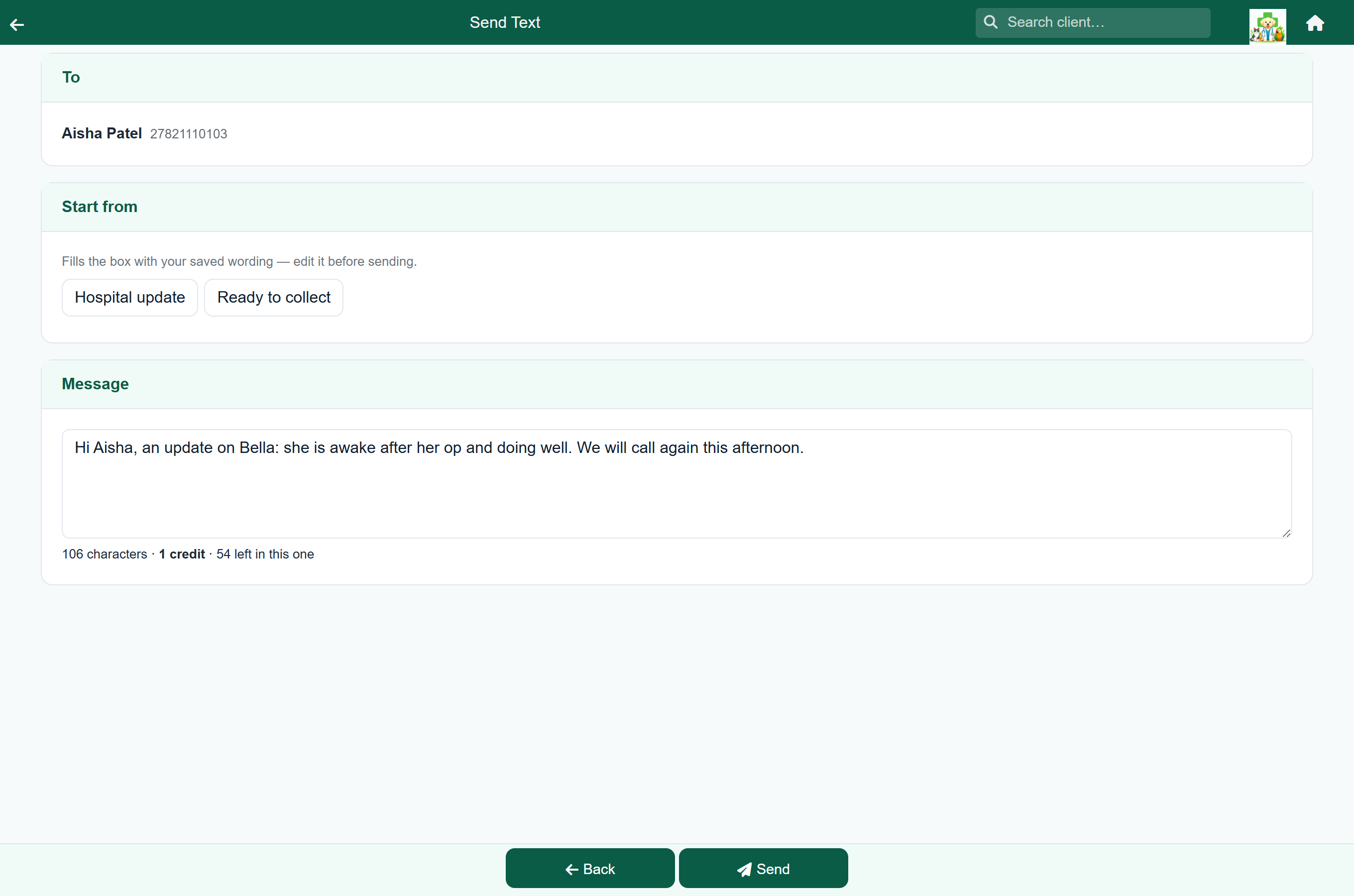
Use this for one-off messages — "your medication is in", "we are running an hour behind".
- Open the client and choose Send Text.
- Check the number shown at the top — that is the number that will be texted.
- Type the message. The counter underneath shows how many credits it will use.
- Press Send.
If the client has no mobile number, or one FastVet cannot read, the screen says so and you cannot send. Correct the number on the client record.
Texting an owner about a patient in your care#
Home›Hospital Patients›a patient›Text Owner
Text Owner is in the Stay Summary of a hospital admission or boarding stay. It opens the Send Text screen for the patient's owner, with starting wording you can pick:
| Starting point | Offered on | For |
|---|---|---|
| Hospital update | Hospital stays | A progress note. It stops mid-sentence for you to finish: "…she is awake and eating". |
| Ready to collect | Hospital and boarding stays | The animal can go home. |
The starting wording is your practice's own — see What the texts say. Edit it before you send. For anything else, type your own message.
Letterheads and automatic emails#
The letterheads on everything your practice sends, the codes that fill in client details, and the switches for automatic emails are covered in Templates & letterheads.
Discharge sheets#
Home›Settings›Discharge Sheets
Discharge sheets are standard client advice — post-operative care, dental aftercare, puppy socialisation — kept as files (PDF or picture).
- Press Add, upload the file and type a Description.
- Press Save.
To give a client a sheet, press Information in the price picker of a consultation, hospital day or boarding day.
What has been sent#
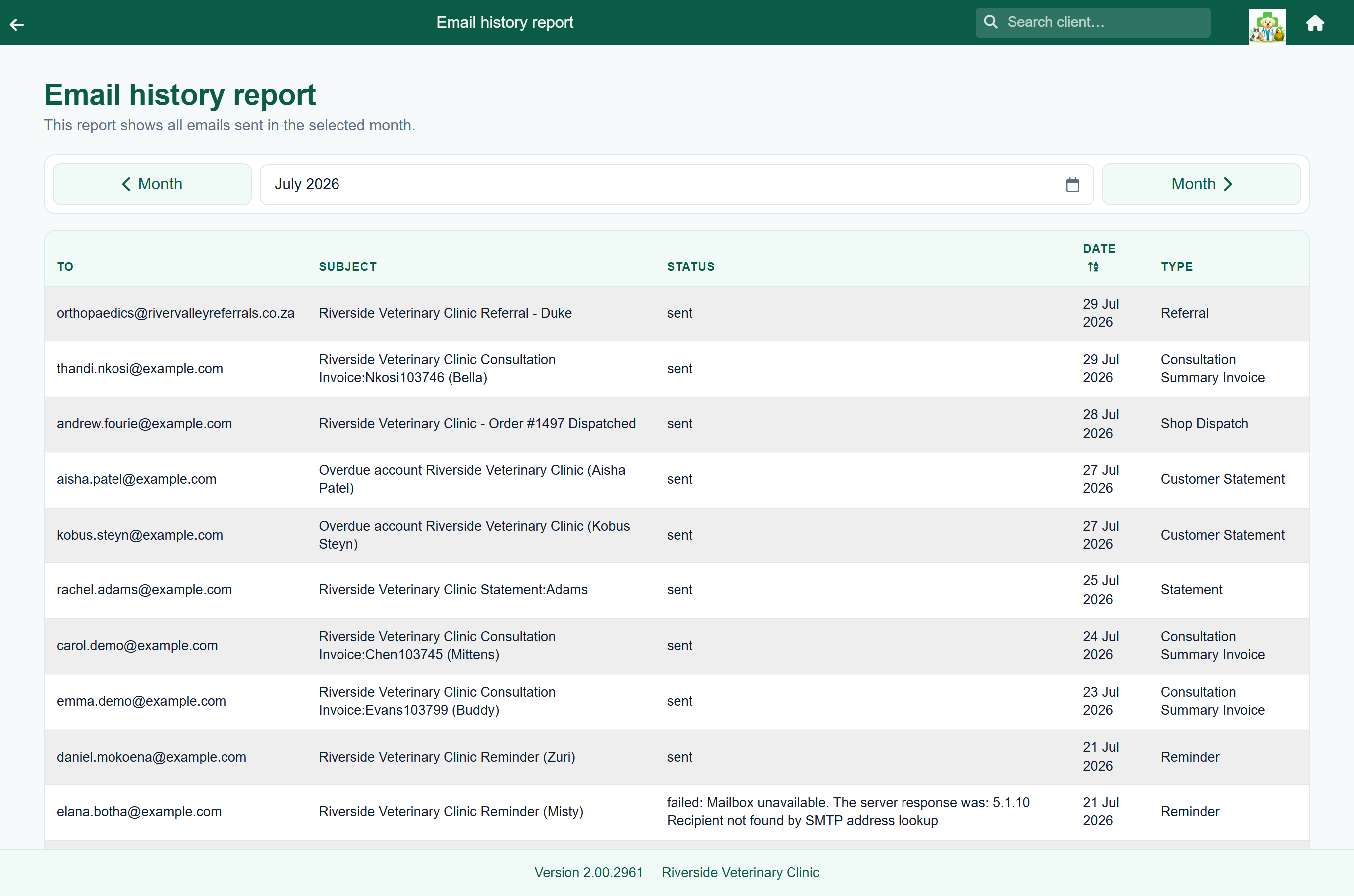
The email history report lists everything FastVet has sent, with the recipient and whether it went.