
Help Centre › Client portal
The client portal
What your clients see when they sign in: their animals, their appointments, their account and their visit history.
The client portal is a website for your clients at client.fastvet.net. Each client sees only their own records. This page describes what they see, so you can talk them through it.
Turning it on#
Three switches control the portal, in the Client Portal & Shop card under Features & Modules:
| Switch | Effect |
|---|---|
| Client portal | Whether clients can sign in. |
| Online booking | Whether signed-in clients can book and move their own appointments. |
| Repeat medication requests | Whether signed-in clients can ask for a refill online. |
How a client gets access#
The portal finds a client by the email address on their client record.
- Make sure the client's email address is correct on their record.
- The client goes to client.fastvet.net and creates a login with that address.
- FastVet links the login to their client record and opens a short setup.
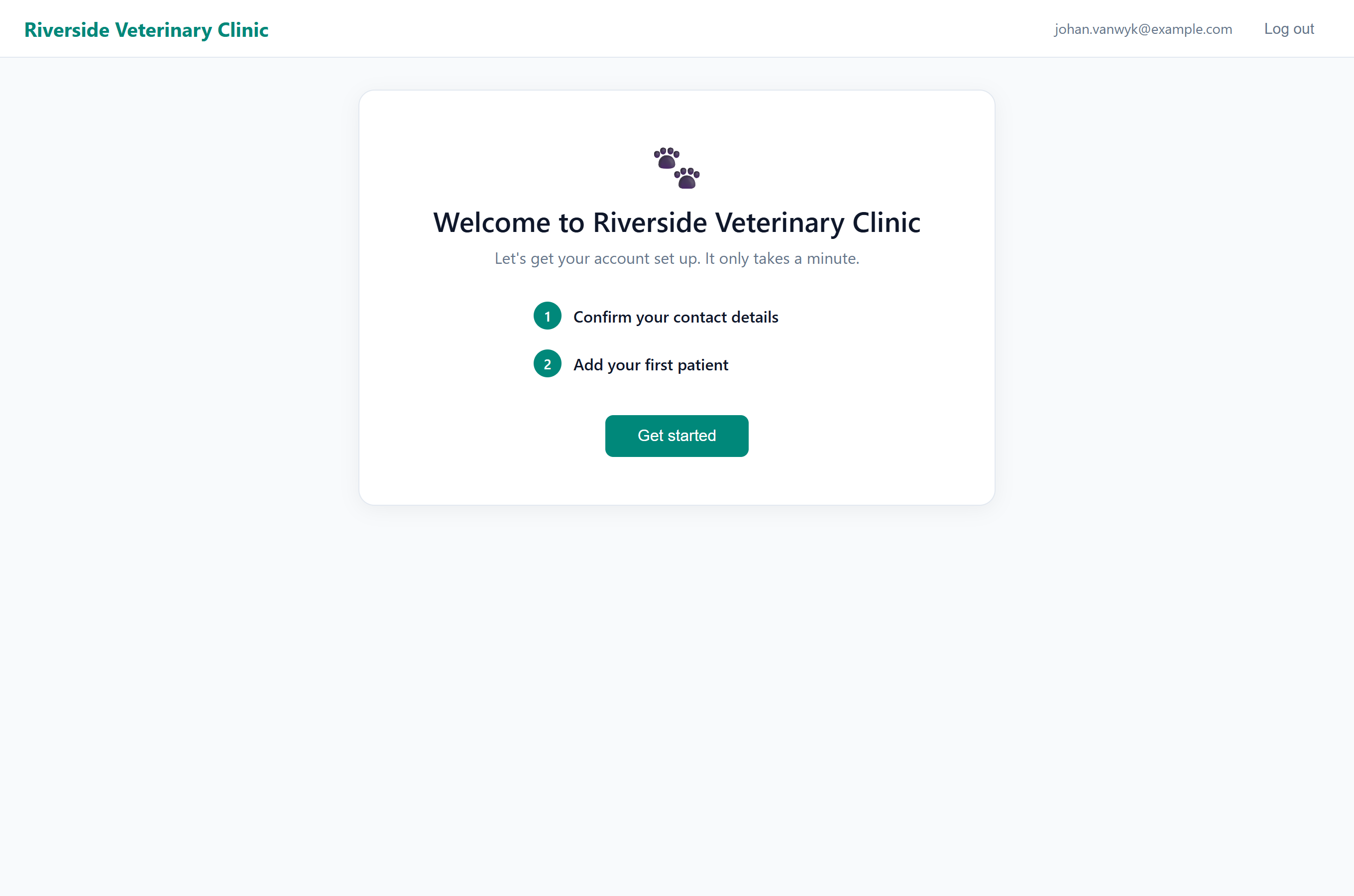
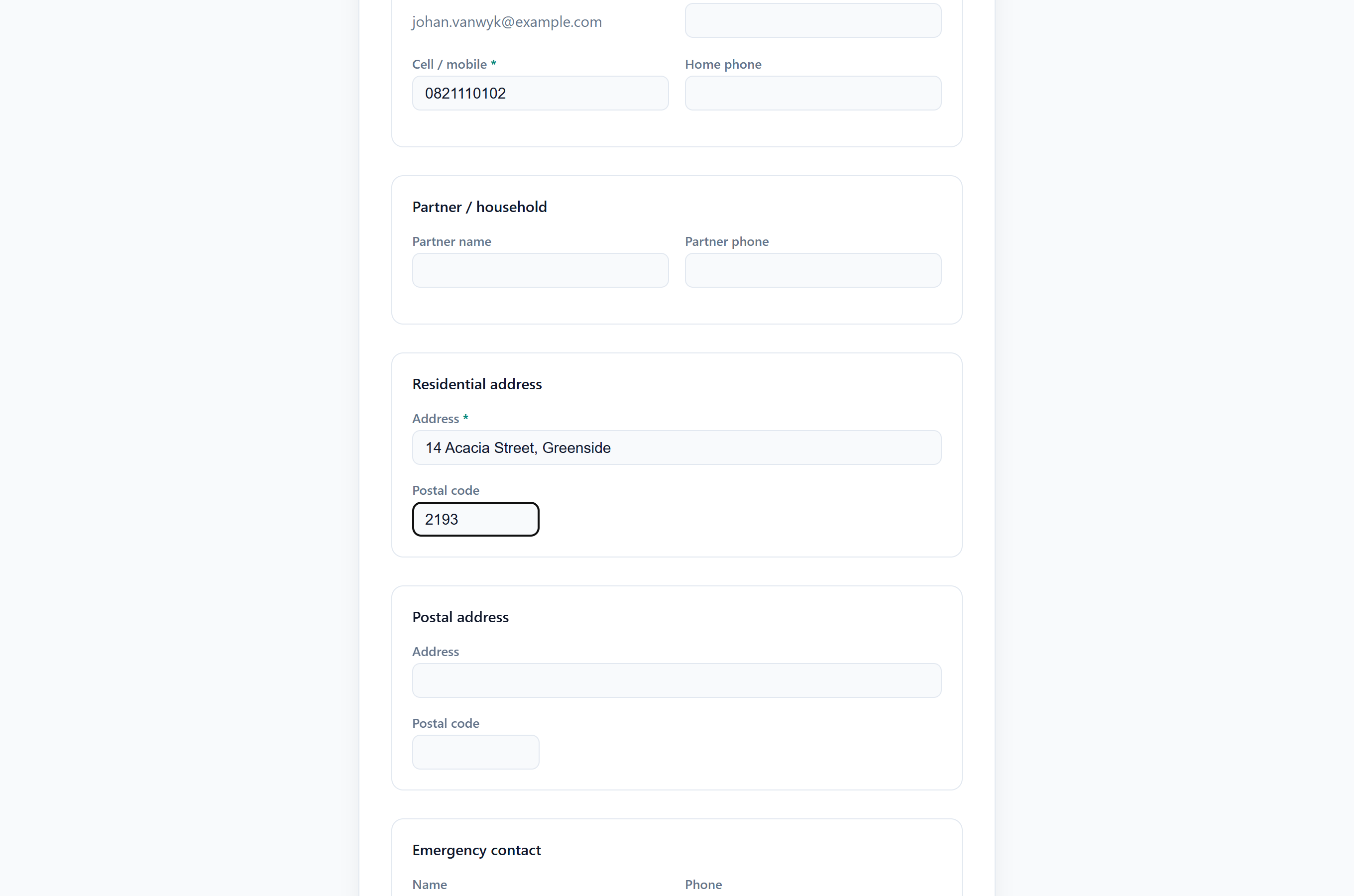
The setup has two steps. Your details asks them to confirm their contact details; first name, last name, cell number and residential address are required. Add your patient asks for an animal, and they can press Skip for now.
The setup comes back each time they sign in until all the required details are filled in and at least one patient is on their record. A client who says the portal “keeps asking me to get started” has a required detail missing, or no patient on file.
Give each client an email address only they use. If two client records share one address, the portal cannot tell which person is signing in. For a couple who share an inbox, keep one client record with both animals on it. If the same address is already on two records, merge them before either person registers.
The dashboard#
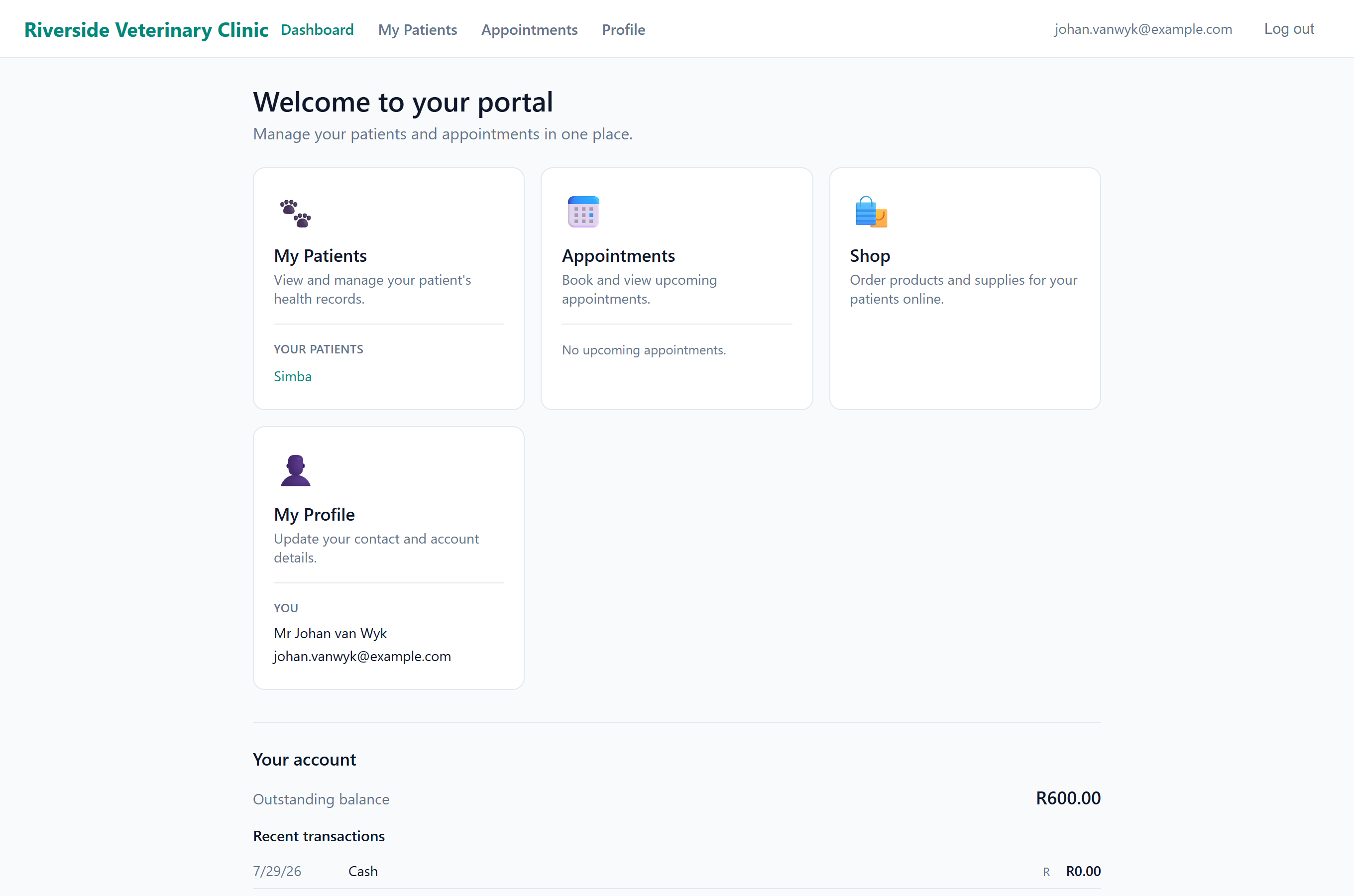
The first screen after signing in has cards for My Patients, Appointments, Medications, Shop (if you run the online shop) and My Profile. Below them are:
- Your account — the outstanding balance, the date of the last payment and the recent transactions. If you take payments online, a Pay balance online button is shown.
- Previous visits — consultations and grooms, each with a Details link.
The Medications card shows one line for each patient on medication, the next repeat due, and a Request a refill link when a refill can be requested. The full list is on the Medications page.
Their animals#
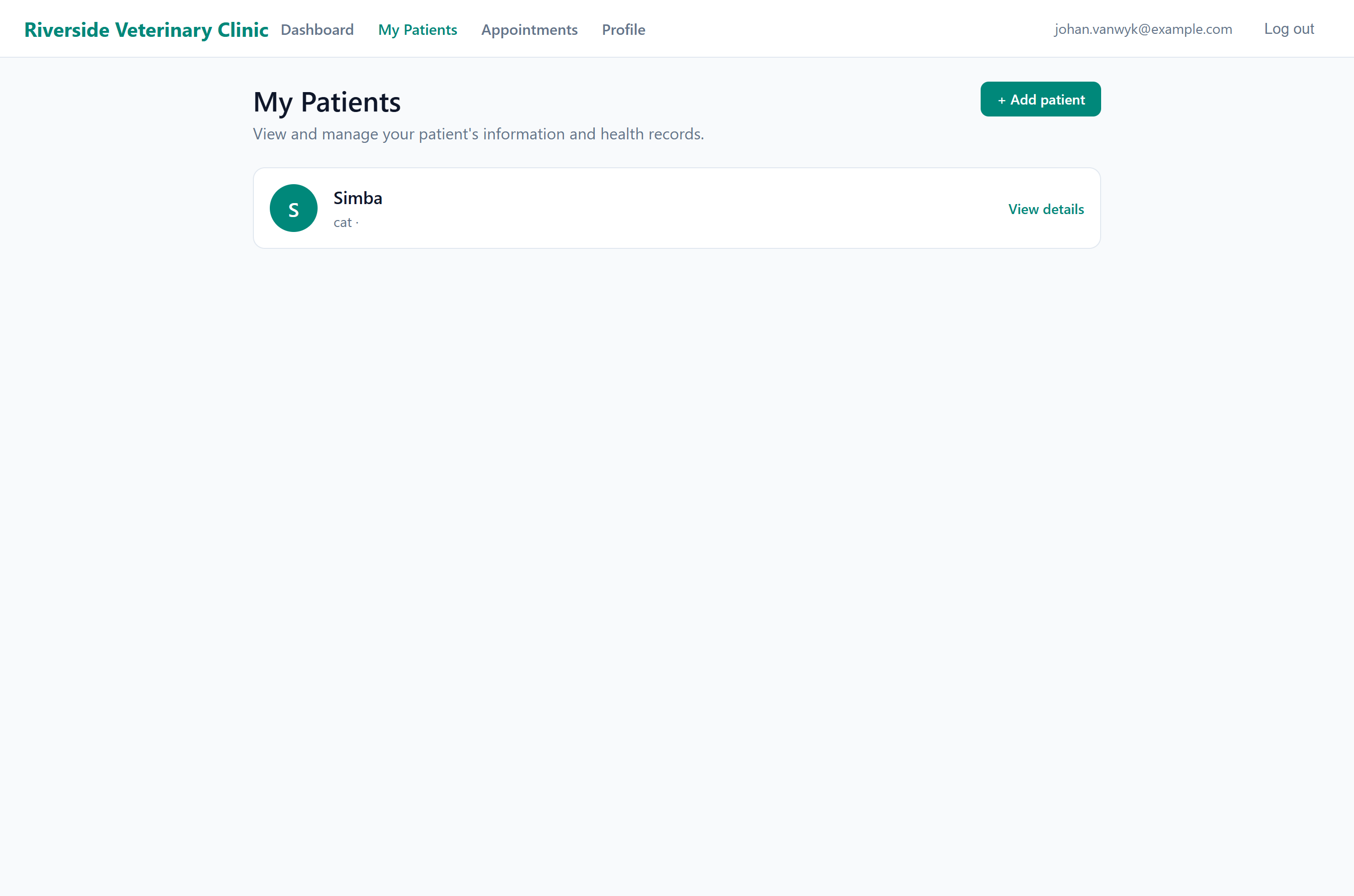
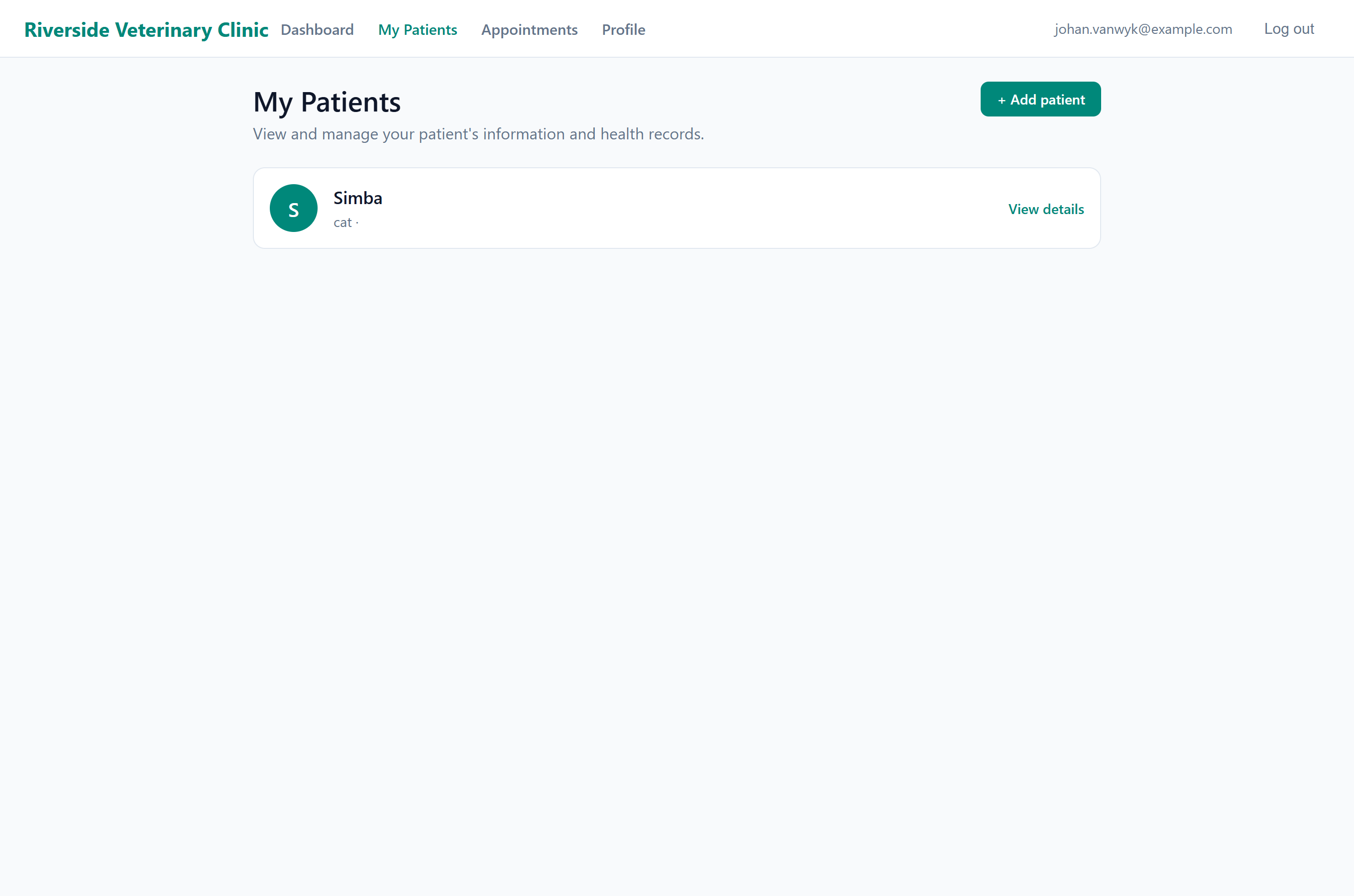
Under My Patients, clients can view and correct their animals' name, species, breed, colour, sex and date of birth. Their changes go straight onto the patient record.
If a colour is not on your list, the client can choose Other… and type their own.
Clients can add an animal at any time with + Add patient, using the same six fields.
Booking an appointment#
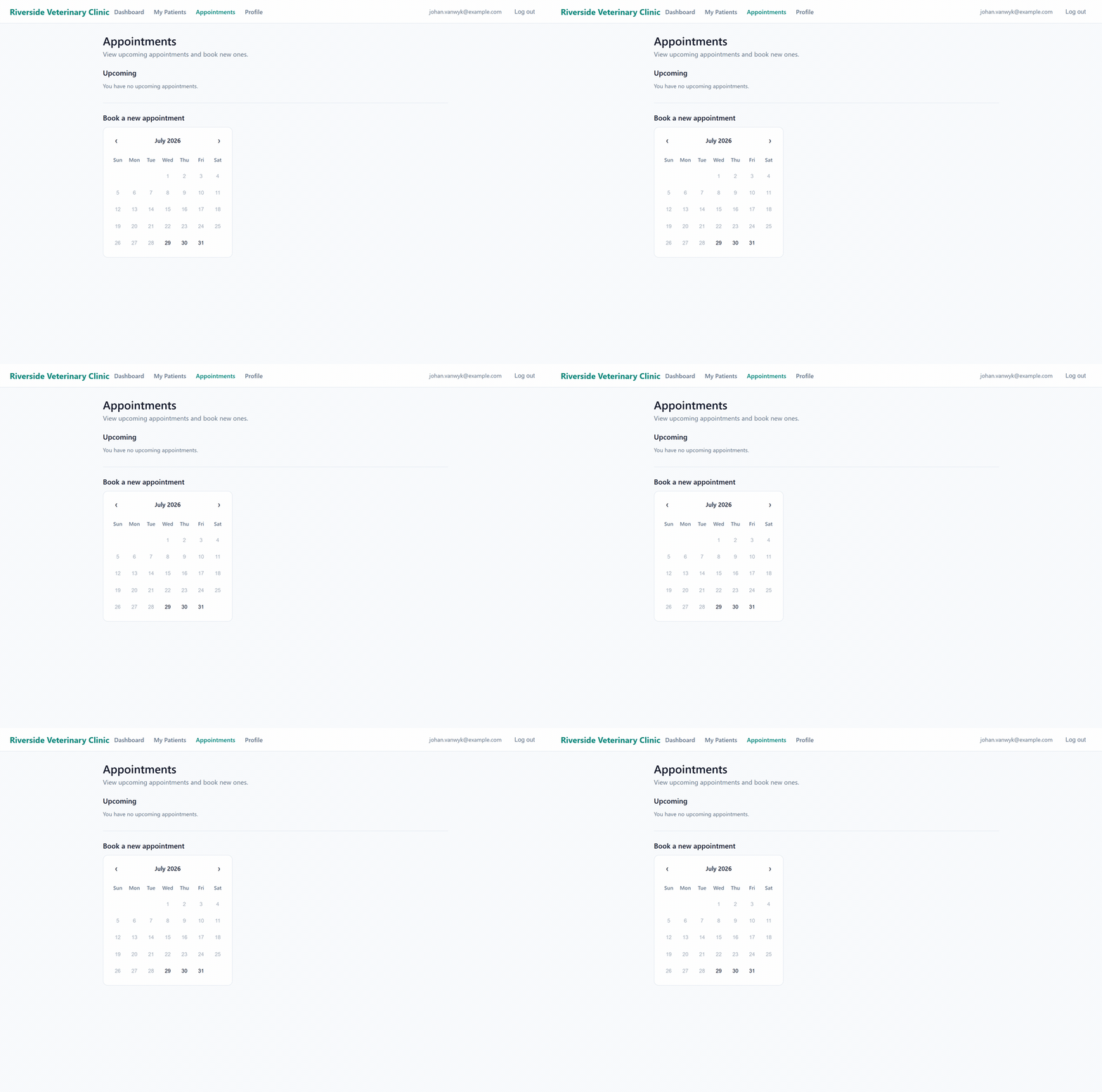
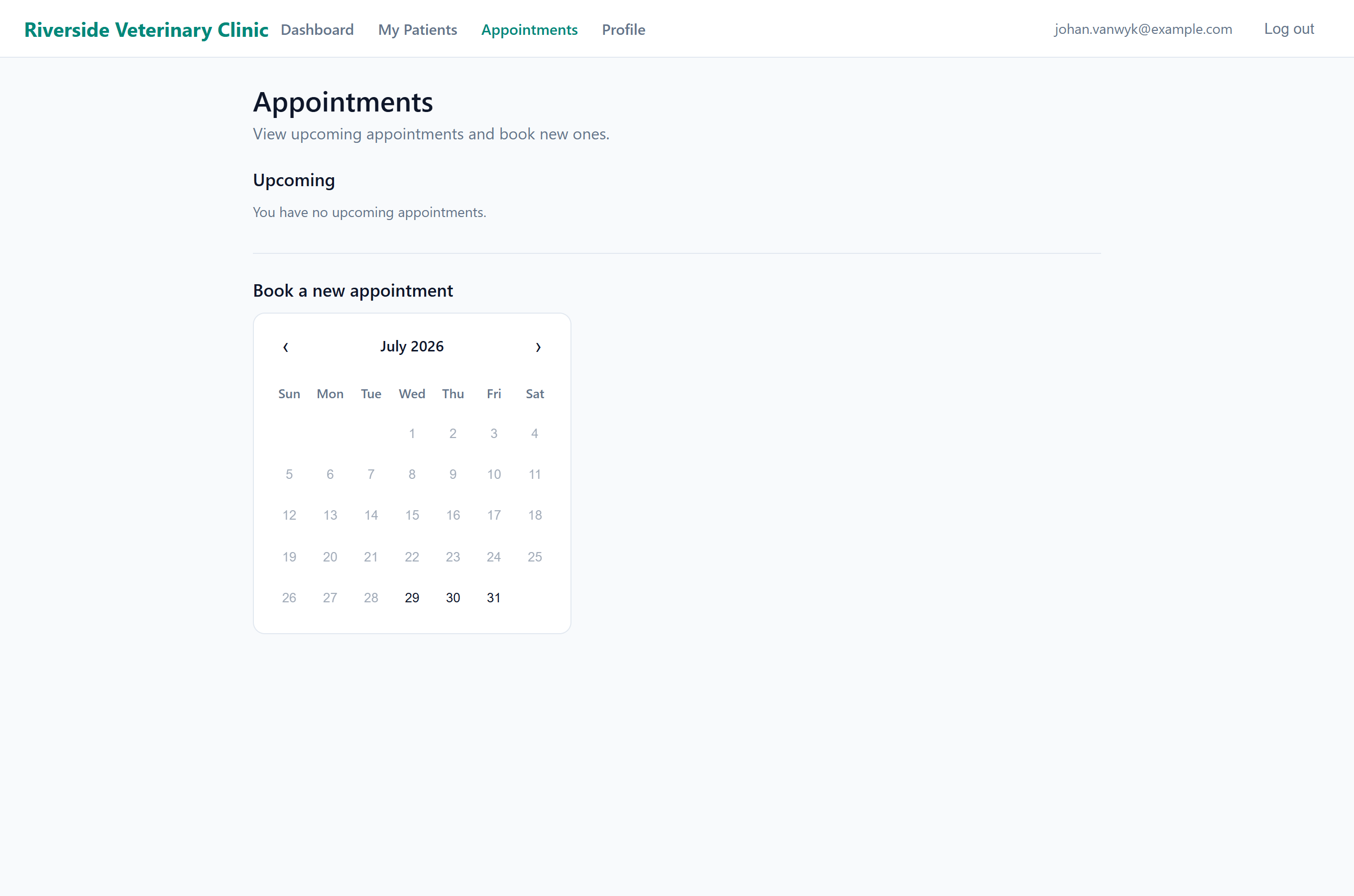
On the Appointments page, under Book a new appointment:
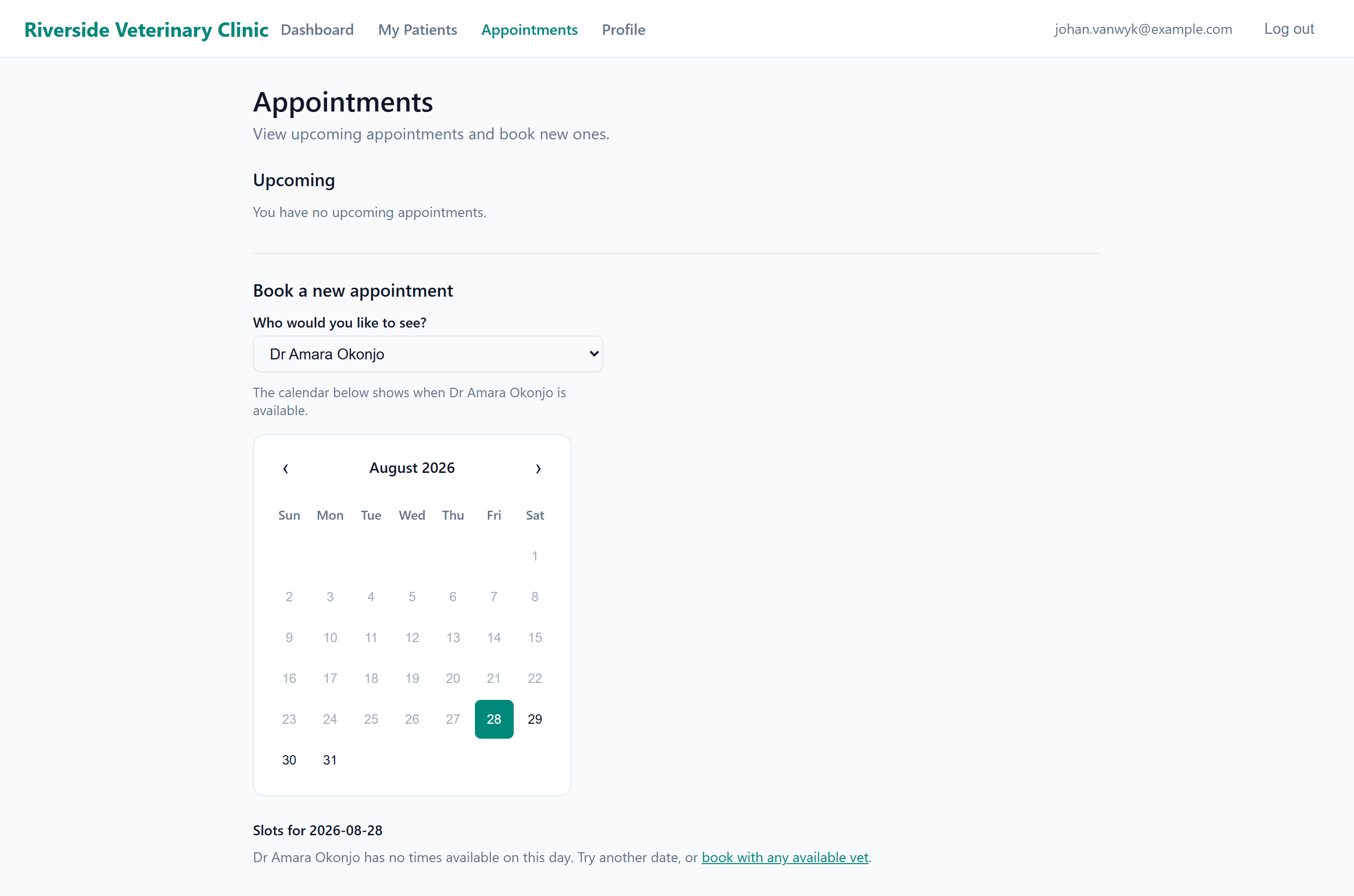
- Under Who would you like to see? the client chooses a vet, or Any available vet.
- They pick a day on the calendar, then a time marked Available.
- They choose the Patient and a Reason.
- They press Book appointment. It appears on your booking list.
Clients see only free times, on days that have appointment slots. A full slot is marked Full and cannot be chosen.
If you use per-vet availability, the calendar shows only the times the chosen vet works. On a day they do not work, the client is told to try another date or to book with any available vet. Unlike reception, a client cannot book a vet outside their hours.
With per-vet availability on, Any available vet is limited to the vets who are free at that time. When all of them are booked, the client sees “All of our vets are booked at that time” and must choose another time.
Clients can move their own appointments#
With Online booking on, a client who opens an upcoming appointment can change its date, time, patient, vet and reason, and save it. You are not notified.
| A client can | A client cannot |
|---|---|
| Move the appointment to another free time | Cancel it — they must phone you |
| Change the patient, reason or vet | Book a full slot, or a day with no appointment slots |
| Move it to a time the vet does not work, if you use per-vet availability | |
| Change anything while Online booking is off |
To keep the diary under reception's control, turn Online booking off and leave the portal on. Clients still see their appointments.
Account and history#
- Their balance and recent transactions, on the dashboard.
- Their visit history, with the items and cost of each visit.
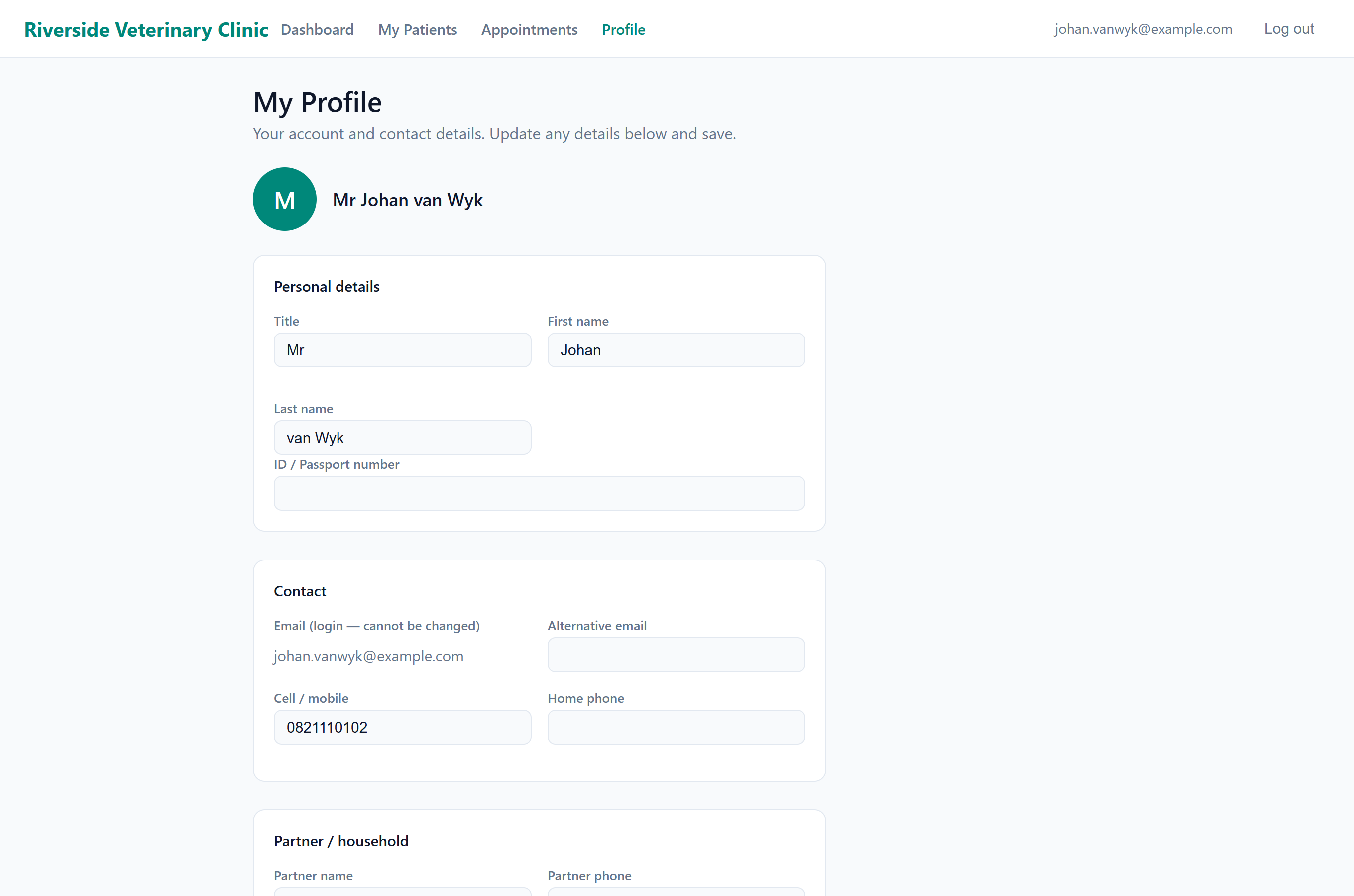
- Their own contact details, under Profile, which they can correct and save.
A visit shows the date, patient, visit type and weight, then every item with its price and the subtotal, VAT and total. Under the heading “Notes for you” it shows the consultation's Client Notes.
Medications and refill requests#
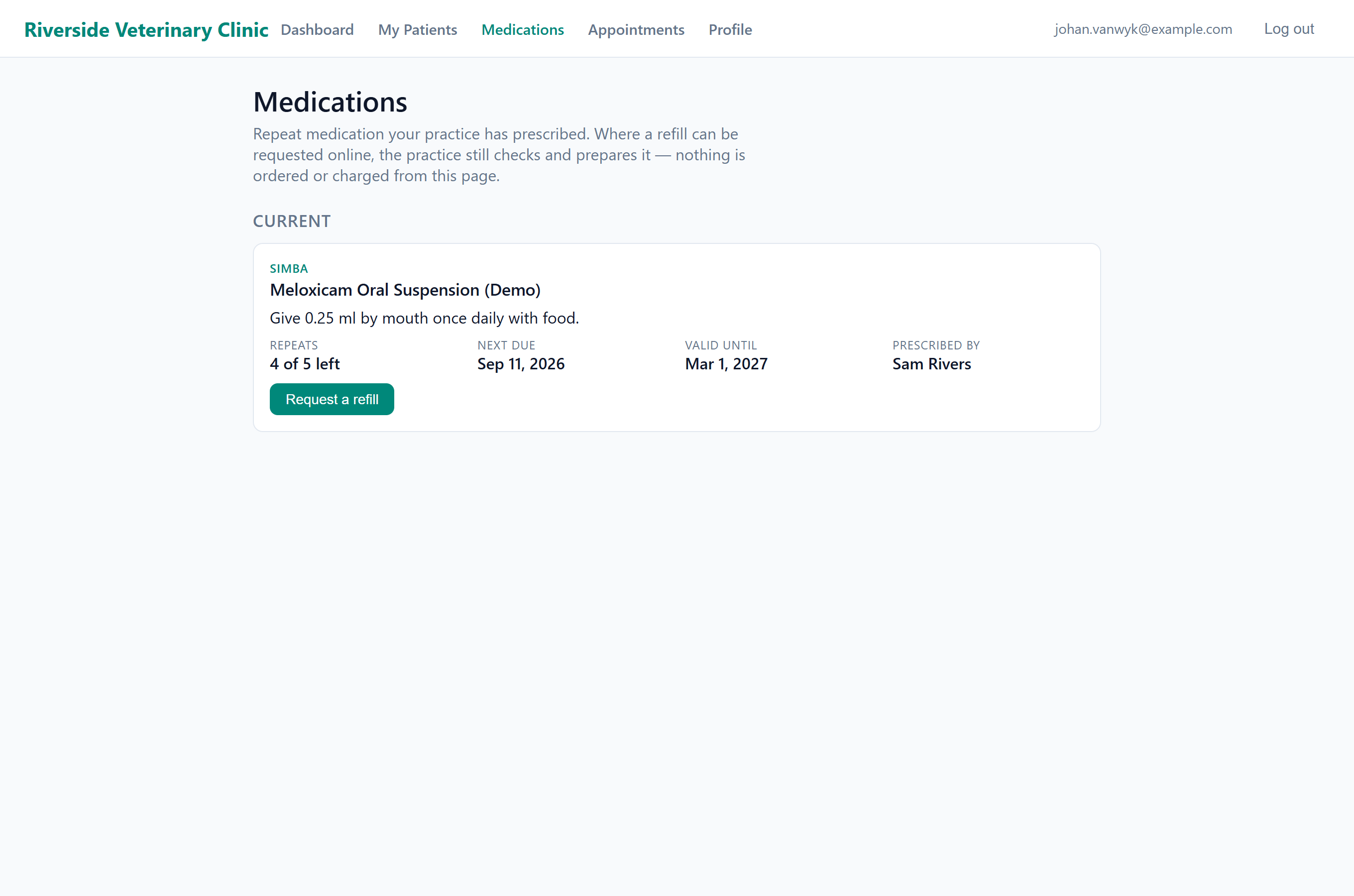
The Medications page lists the repeat prescriptions for the client's patients, under Current and Finished: the medicine, the directions, the repeats left, the next due date, the valid-until date and the prescribing vet. Medicine you did not write as a prescription does not appear.
If you ticked Owner may request a refill from the client portal on the prescription, the client sees Request a refill. They can add a note, then press Send request. The request goes to Refill requests in the staff app for you to approve or decline. See Prescriptions & repeats.
- While a request is waiting, the client sees “Refill requested — waiting for the practice” and can Withdraw it.
- After you approve it, they see that you are preparing it. They cannot ask again until you dispense it.
- If you decline it, they see your reason.
- Approving a request does not dispense or charge anything.
Clients do not see internal comments, the schedule, or notes a vet recorded when supplying a repeat.
The shop#
If you run the online shop, clients see a Shop card on the dashboard. The staff side is in The online shop.
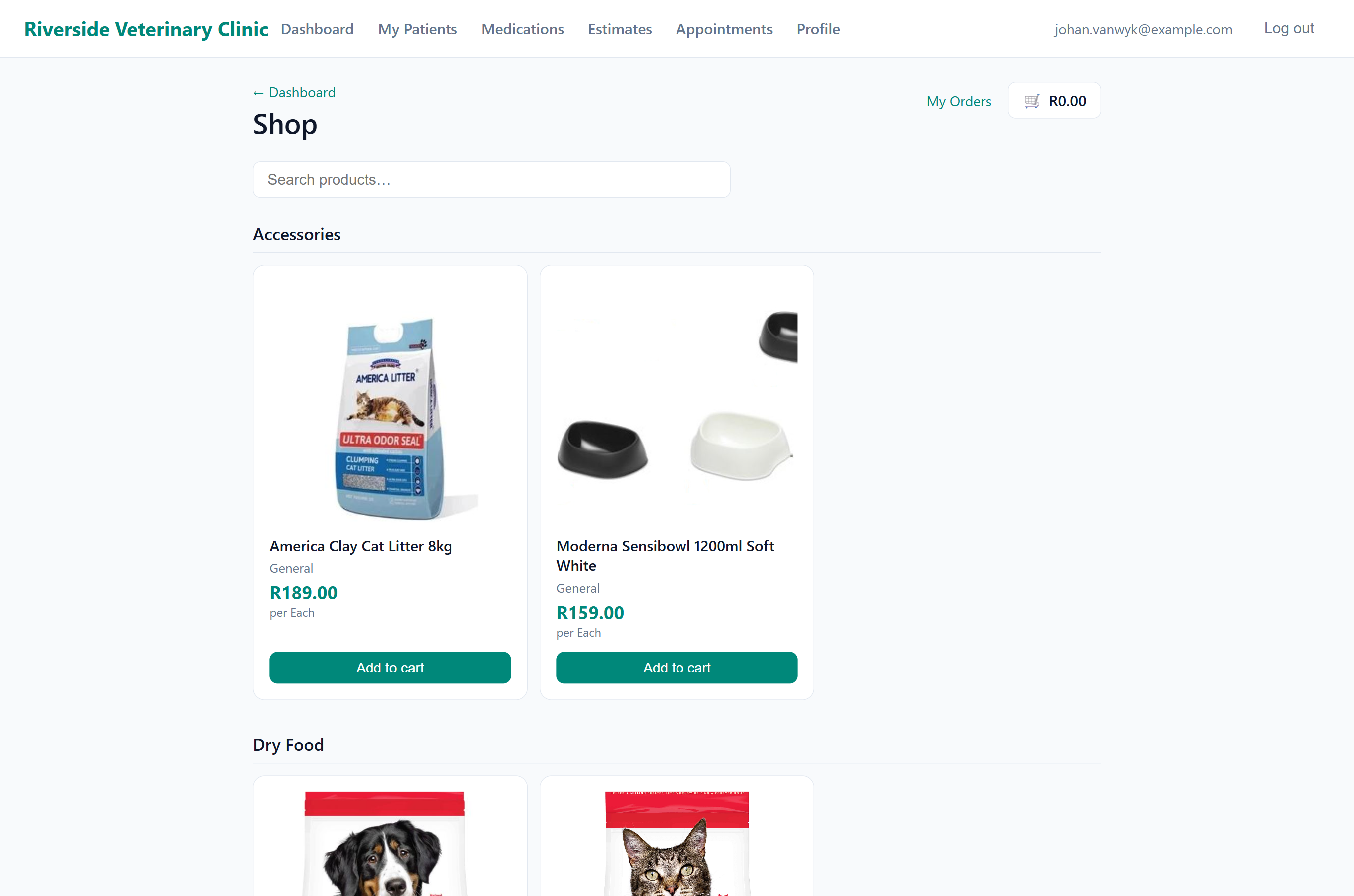
- They browse or search the shop and press Add to cart.
- In the cart they adjust quantities, then press Proceed to checkout.
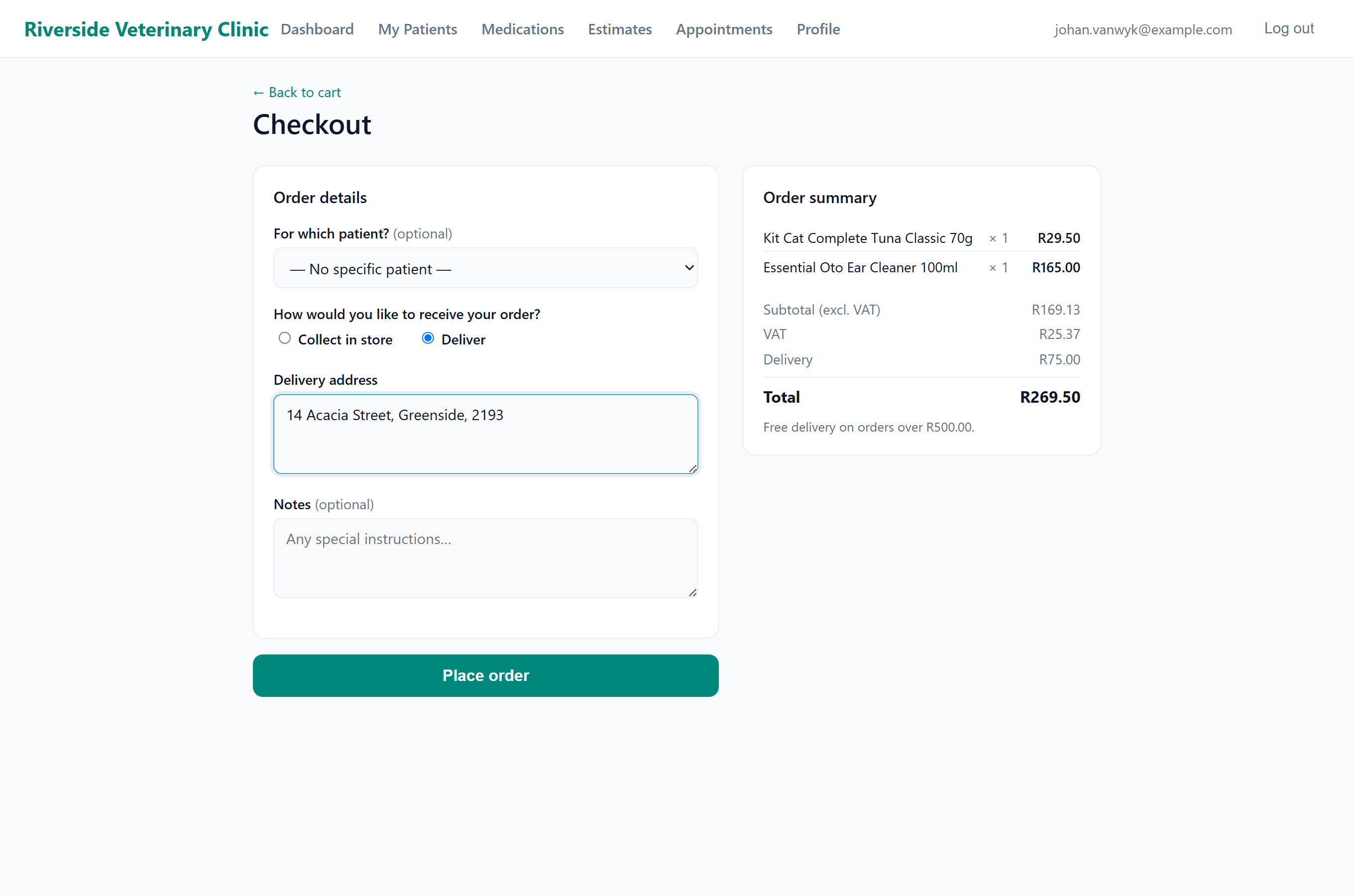
- At checkout they can choose a patient, choose Collect in store or Deliver (if you offer delivery), and add a note.
- They press Place order. If you take card payments online, they pay there and then.
- The order appears in Shop Dispatch.
Clients see their orders under My Orders:
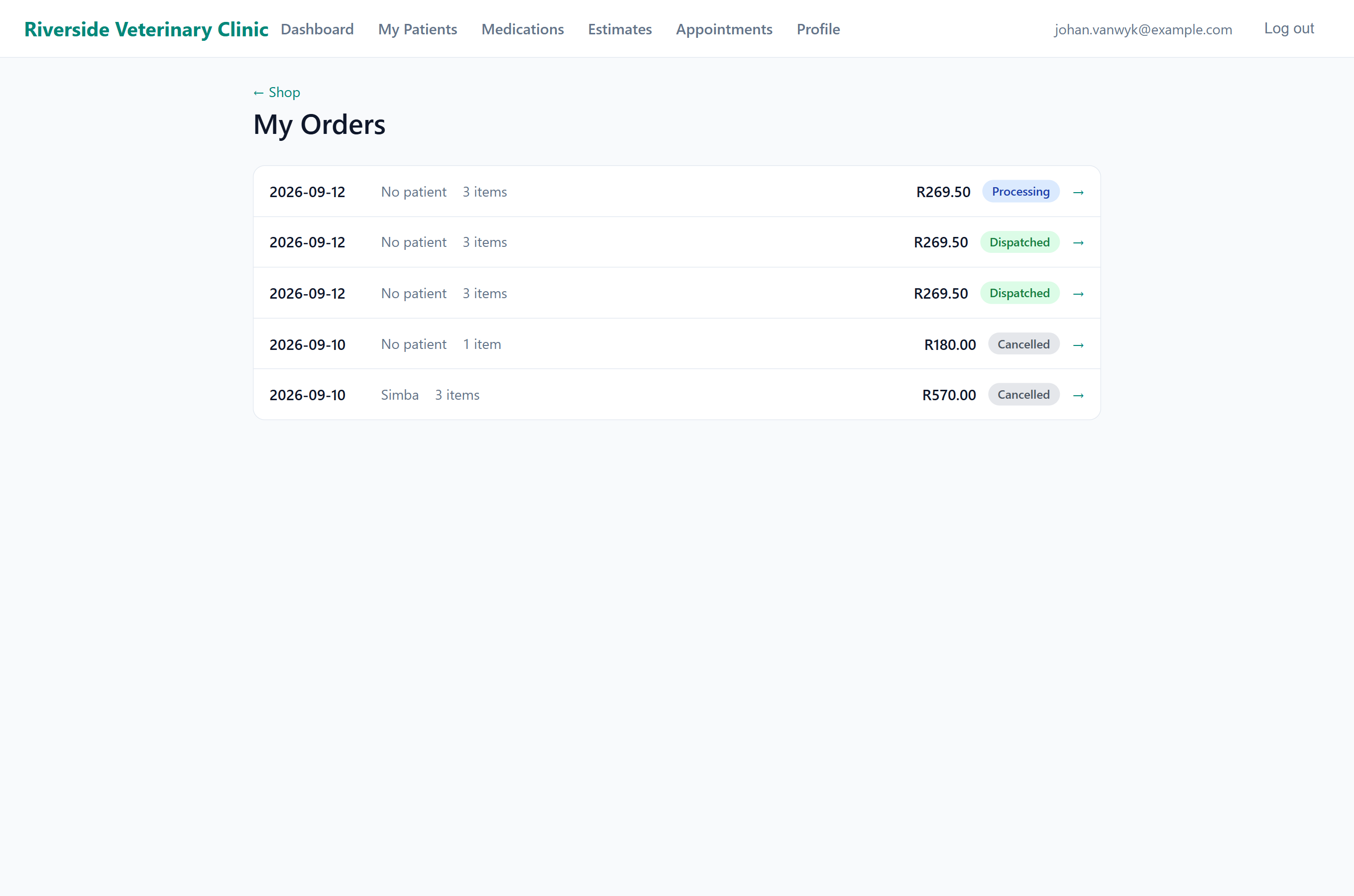
| Status | Means |
|---|---|
| Awaiting payment | The order is not paid. If you take card payments online, the client can press Pay now. If not, you take the payment. |
| Processing | Paid, and waiting for you in Shop Dispatch. |
| Ready for collection | You marked it dispatched and the client chose to collect. |
| Dispatched | You marked it dispatched and the client chose delivery. |
| Cancelled | The order was cancelled. |
An order awaiting payment is on the Unpaid Orders tab, not your dispatch list. If you take card payments online, ask the client to press Pay now in My Orders. Otherwise, take the payment with Accept Payment on that tab.
The shop, delivery, the delivery fee and free delivery are set under Features & Modules.
Common questions from clients#
When something is wrong, the portal shows a full-page message. Ask the client to read you the heading:
| They see | What it means | What to do |
|---|---|---|
| “Account Not Found” | They signed in, but no client record has that email address. The screen shows the address they used. | Correct the email on their client record, then ask them to sign in again. |
| “Portal Unavailable” | The Client portal switch is off. | Switch it on if that was a mistake. See Turning it on. |
| “Your session has expired” | They were signed out after a period of inactivity. | They press Log in again. |
| They say | Check |
|---|---|
| “It will not let me sign in.” | The email address on their client record matches the one they use. |
| “I cannot see my dog.” | The patient is on the right client record. It may be on a partner's record. |
| “There are no appointment times.” | Online booking is on, and your appointment slots cover that day. |
| “My balance looks wrong.” | Their account in FastVet. The portal shows the same figures. |
| “I cancelled my appointment.” | The booking list. Clients cannot cancel in the portal, so the appointment still stands. |
| “I ordered something and heard nothing.” | Shop Dispatch, and whether the order was paid. |