
Help Centre › Clinical care
Clinical history
Everything recorded about a patient on one screen — visits, notes, lab results, medication, vitals, weight trends and attached files — searchable, filterable, and available from inside a consultation.
The clinical history shows every visit a patient has had, every note, every lab result, everything dispensed and every file attached, on one page in date order.
Opening it#
| From | How |
|---|---|
| A consultation | Press History in the footer. Press back to return to the consultation as you left it. |
| The client's account | Open the client and press History on the patient. |
What is on the screen#
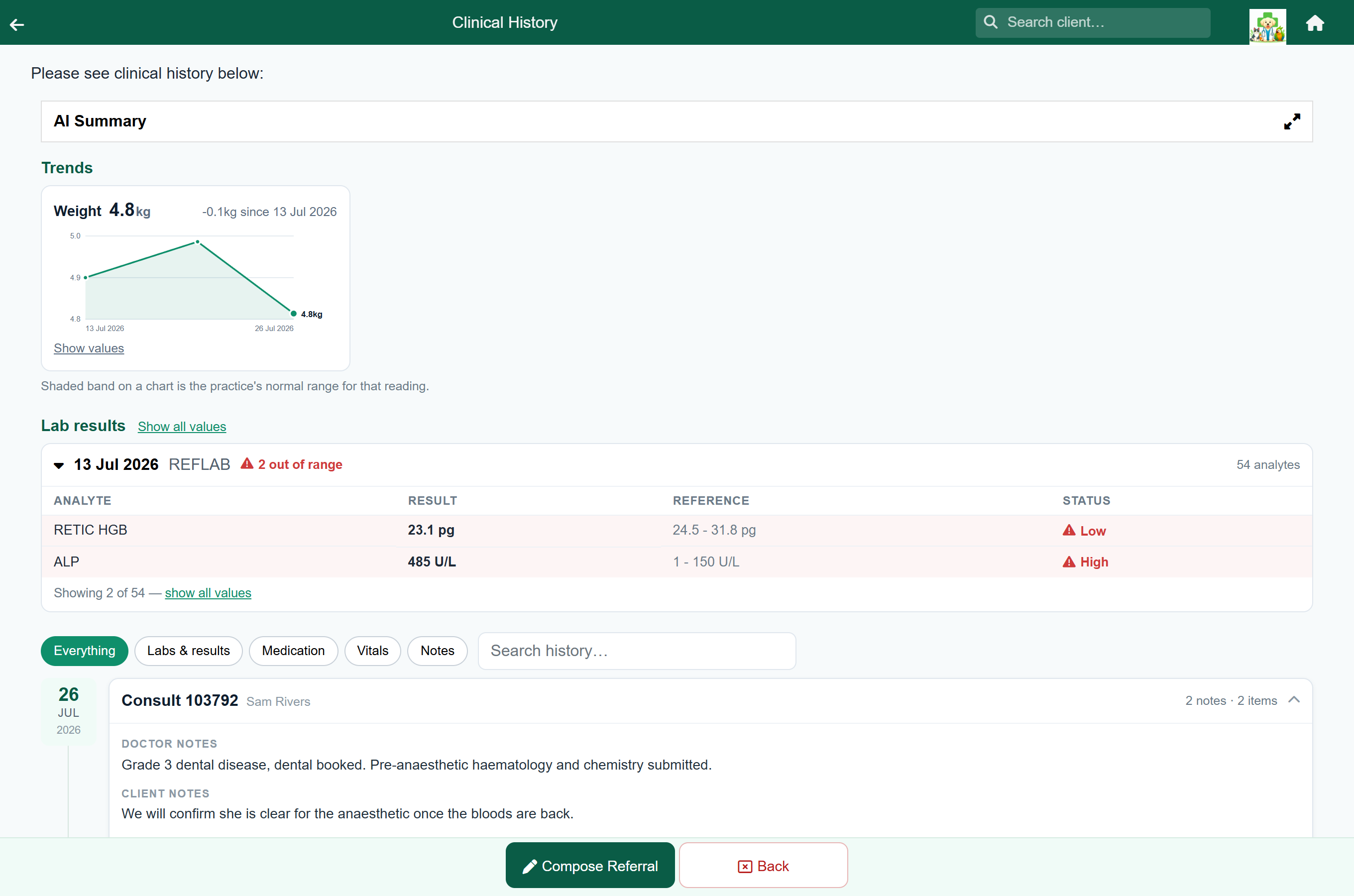
The patient panel sits at the top, folded to one line — name, photo, sex and weight — so you can always see whose history this is. Tap it for the full panel with the owner's details.
| Section | What it holds |
|---|---|
| AI Summary | A short written recap of the whole record, once the patient has one. Starts folded. |
| Trends | A chart for weight and for each vital that has been recorded more than once. |
| Lab results | Every lab result, newest first, with how many values are out of range. See Lab results. |
| Timeline | One card per visit or event, newest first, with filters and a search box above it. |
The summary at the top#
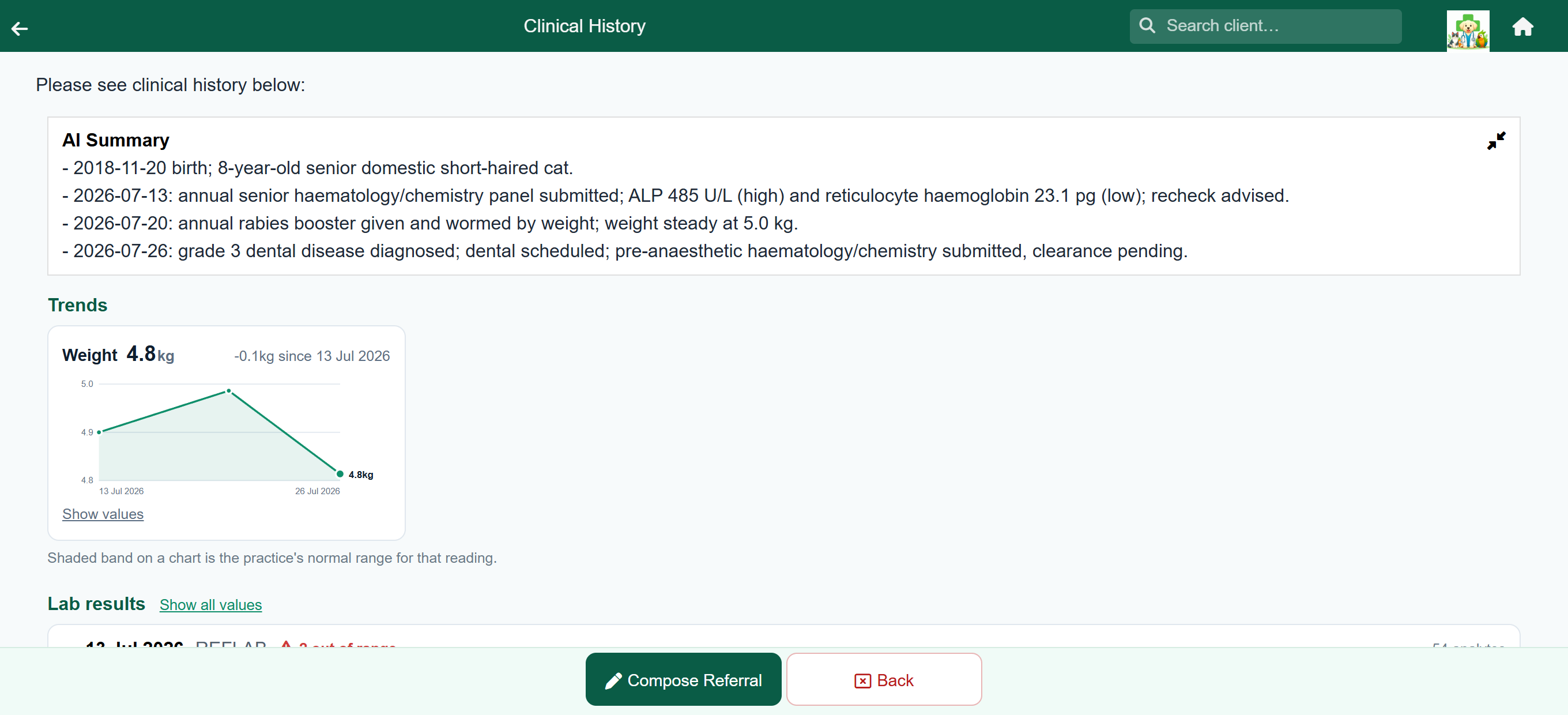
Where your practice has AI features switched on, FastVet keeps a written summary of the patient's record at the top of the page. Tap AI Summary to open it.
It is a quick way into an unfamiliar patient, but it is written from the notes, so it only knows what was written down. See Voice notes & AI summaries.
Weight and vital trends#
Each chart plots one measurement over time, with the latest reading and the change since the first one.
- A chart appears once there are two or more readings.
- Where a vital has a normal range, set under Settings → Vitals, the chart shows it as a grey band.
- Show values under a chart lists the readings and their dates.
Lab results in context#
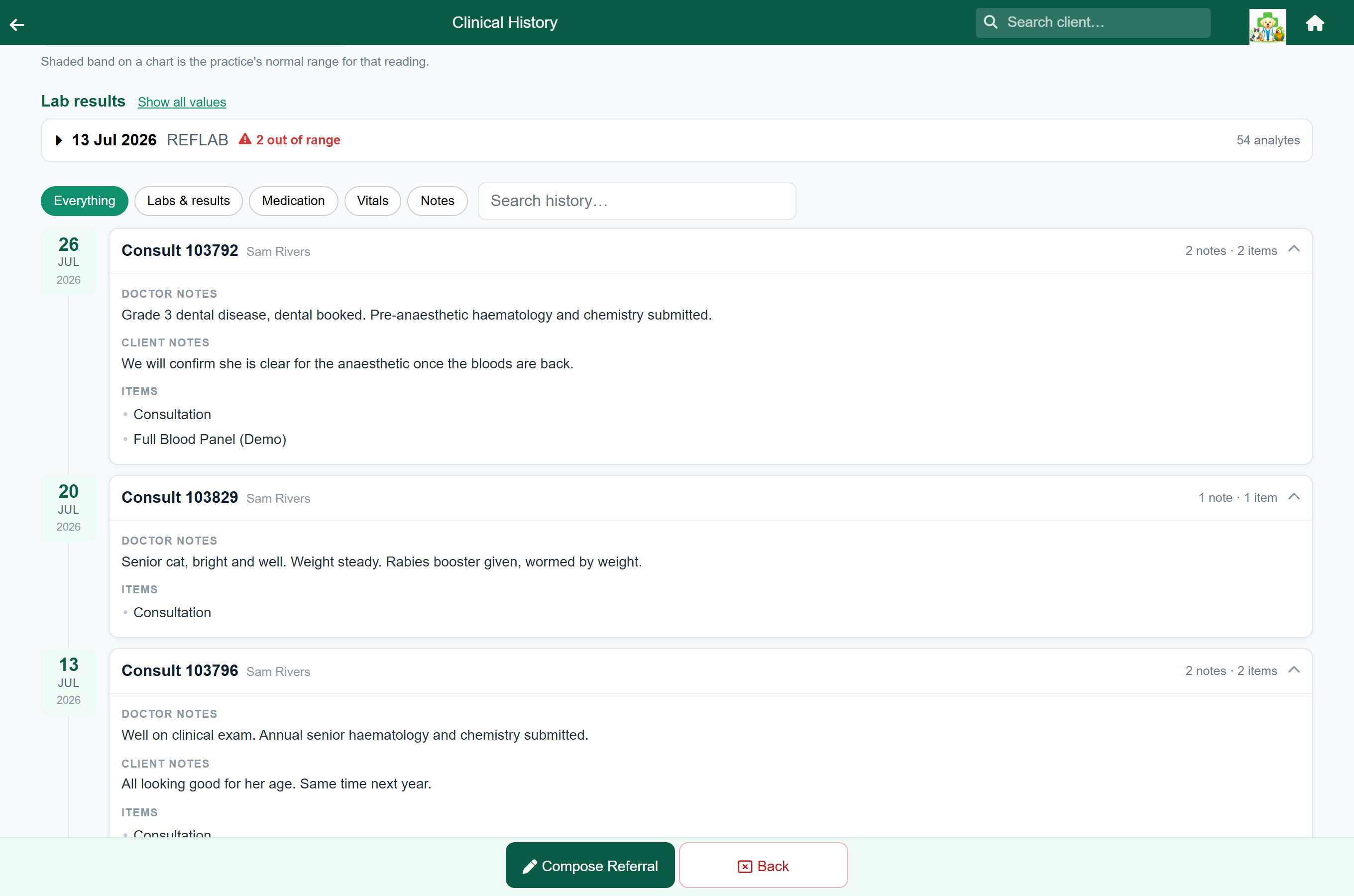
Each result shows its date, the test and one of four statuses. The newest result opens by itself; tap any other to open it.
| Says | Means |
|---|---|
| ⚠ 2 out of range | Two values are outside the reference range. |
| ✓ All within range | Every value is back and none is flagged. |
| ⏳ Awaiting results | The lab has the order but no values have come back yet. |
| ⏳ 3 of 45 back, none out of range | Some values are back and none is flagged so far. The rest are still to come. |
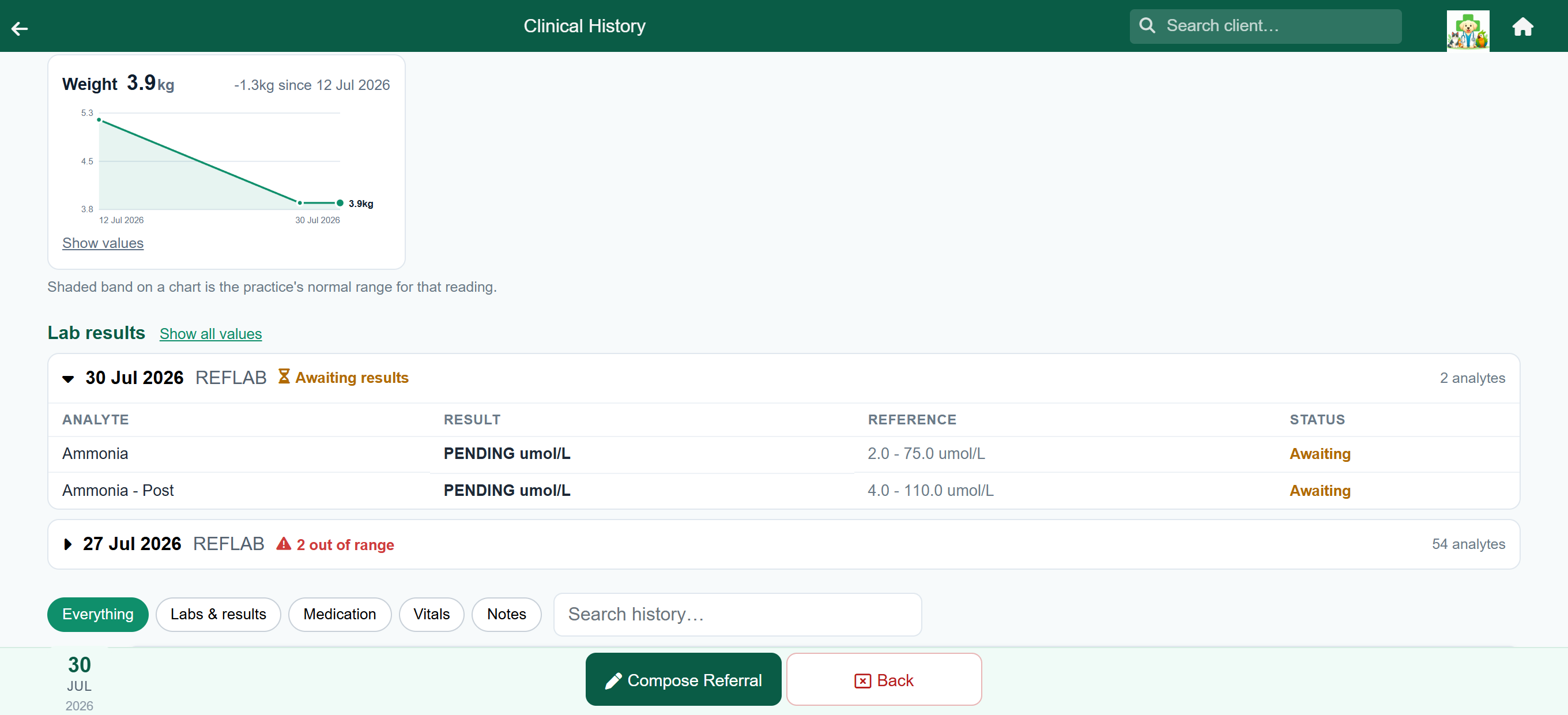
An opened result shows the flagged values only — the value, the reference range, and Low or High. Show all values at the top, or show all values under a result, shows the rest. Abnormal only goes back to the flagged values.
Where the lab gives a numeric reference range, a small bar above it shows where the value falls. The green band is the normal range. The tick is the value: green inside the range, red above it, blue below. It is the same bar as on the lab results screen.
The timeline#
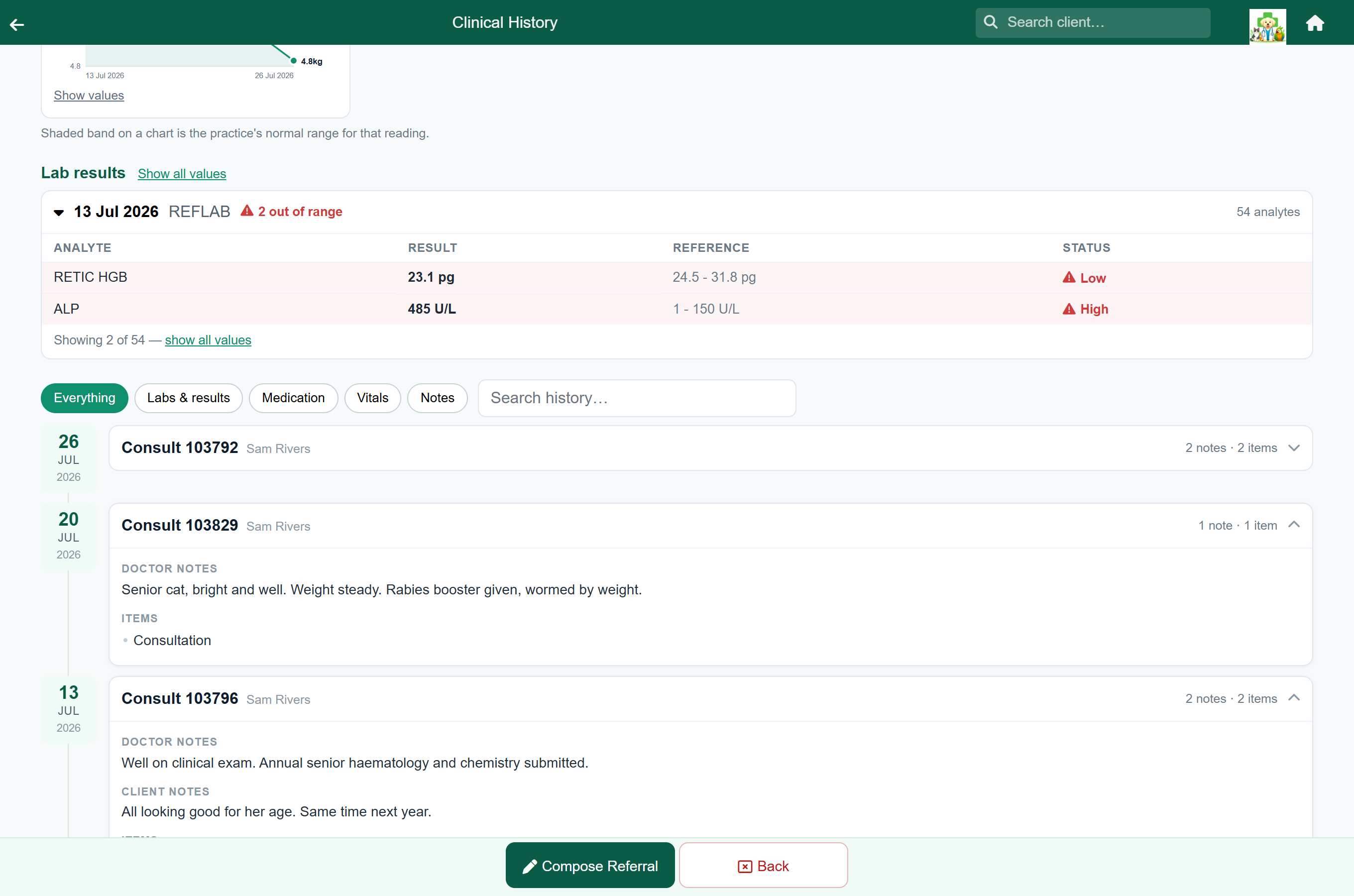
Below the filters is one card per visit or event, newest first. Each card shows the date, what it was — for example Consult 103792, Pet Data Upload or Vitals — who recorded it, and a count of what is inside, such as 2 notes · 2 items.
Cards start open. Tap a card's header to fold it.
| Group | What it holds |
|---|---|
| Doctor notes / Client notes / AI note | The notes from the visit, each under its own label. Empty notes are left out. See Clinical notes. |
| Vitals | The readings and weight from that visit. |
| Results & tests | Lab and imaging lines, with their results. |
| Medication | What was dispensed, with the instruction underneath. |
| Items | Everything else charged — the consultation fee, procedures, consumables. |
| Files | Attached files as preview cards. Tap one to open it. X-rays open in the image viewer. |
Finished grooms appear on the timeline too, with what was done, the groomer's notes and any weight taken.
Filtering and searching#
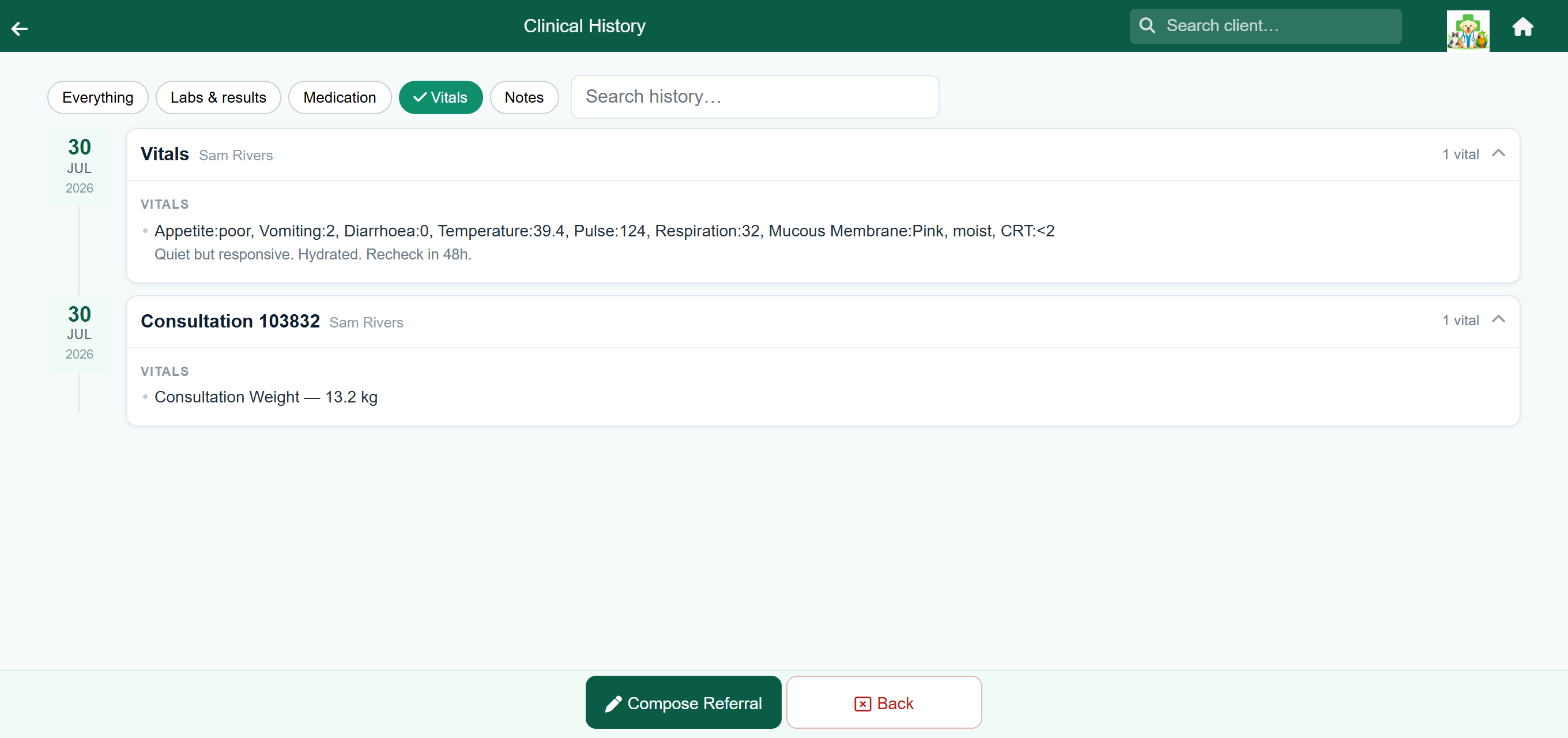
Above the timeline are five filter buttons and a search box. Everything is the default. The other four can be combined — turning on Vitals and Notes shows both.
| Filter | Shows |
|---|---|
| Labs & results | Lab and imaging lines, and anything with a result recorded. |
| Medication | Drugs, injectables, vaccinations, fluid therapy and sedation. |
| Vitals | Recorded vitals and weights. |
| Notes | The written notes. |
The search box narrows the list further. It searches descriptions, results, comments and file names, so “amox” finds every visit where it was dispensed.
Documents, photographs and scans#
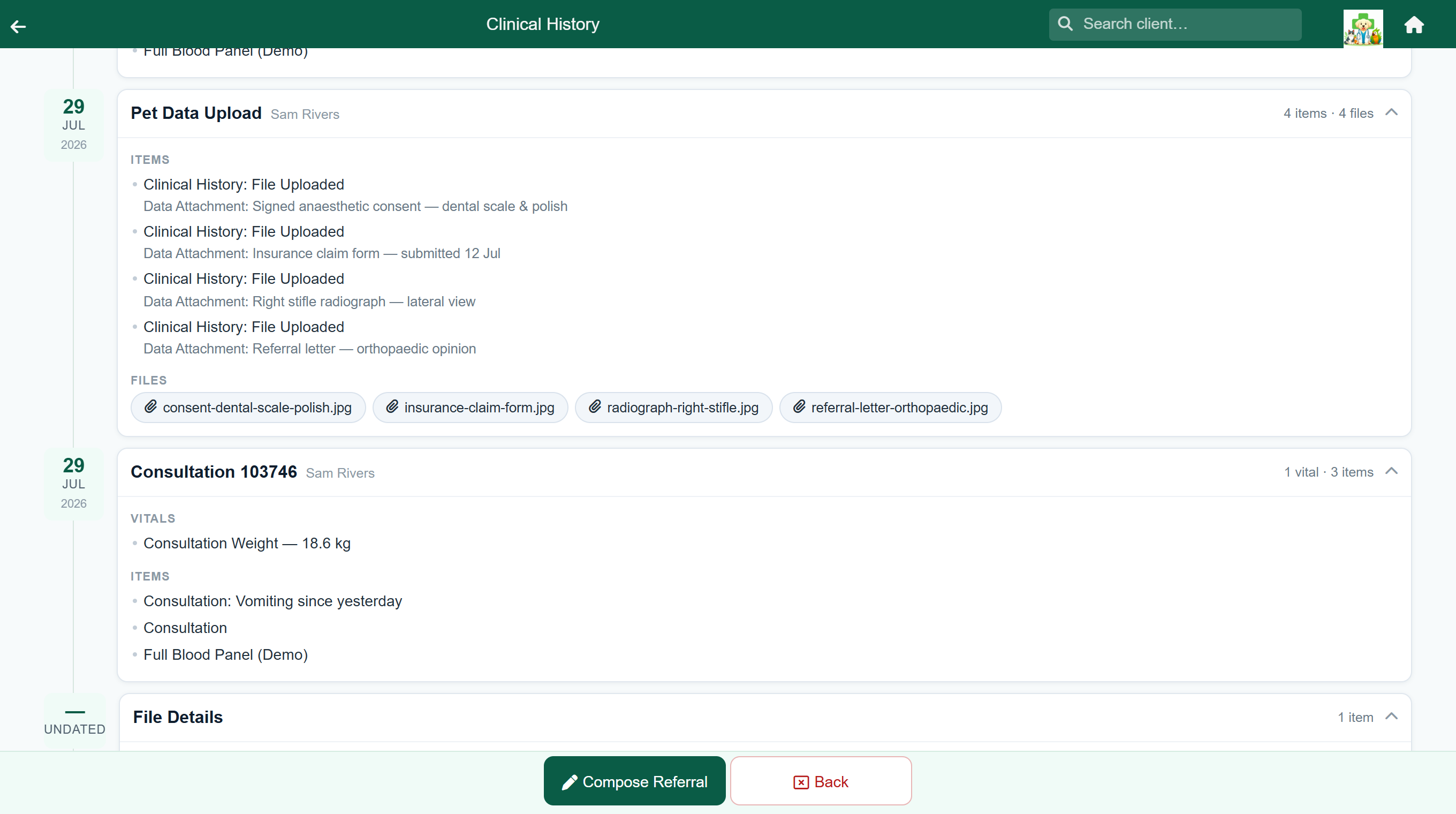
Anything uploaded for the patient — a consent form, a radiograph, a specialist's letter — appears on the timeline on the day it was added, with its description. Photographs show the picture and PDFs show their first page. Tap a card to open the file.
Files are uploaded from the patient record. See Documents and photographs.
Turning the history into a referral#
Compose Referral in the footer builds a referral letter from the records on this screen. It is greyed out for a patient with no history. See Consultations → Referral letters.
Who can see it#
The client does not see this screen. The only note a client sees from a visit is Client Notes, in the client portal.