
Help Centre › Stock & pricing
Stock & inventory
Receive deliveries, keep counts honest, track lot numbers and expiry dates, and see where stock went.
FastVet tracks stock for any catalogue item you tell it to. Charging or selling the item takes it off stock automatically; booking in a delivery adds it back. Every movement is recorded, so you can see how a count was reached.
What you have#
Home›Stock & Prices›Manage Stock
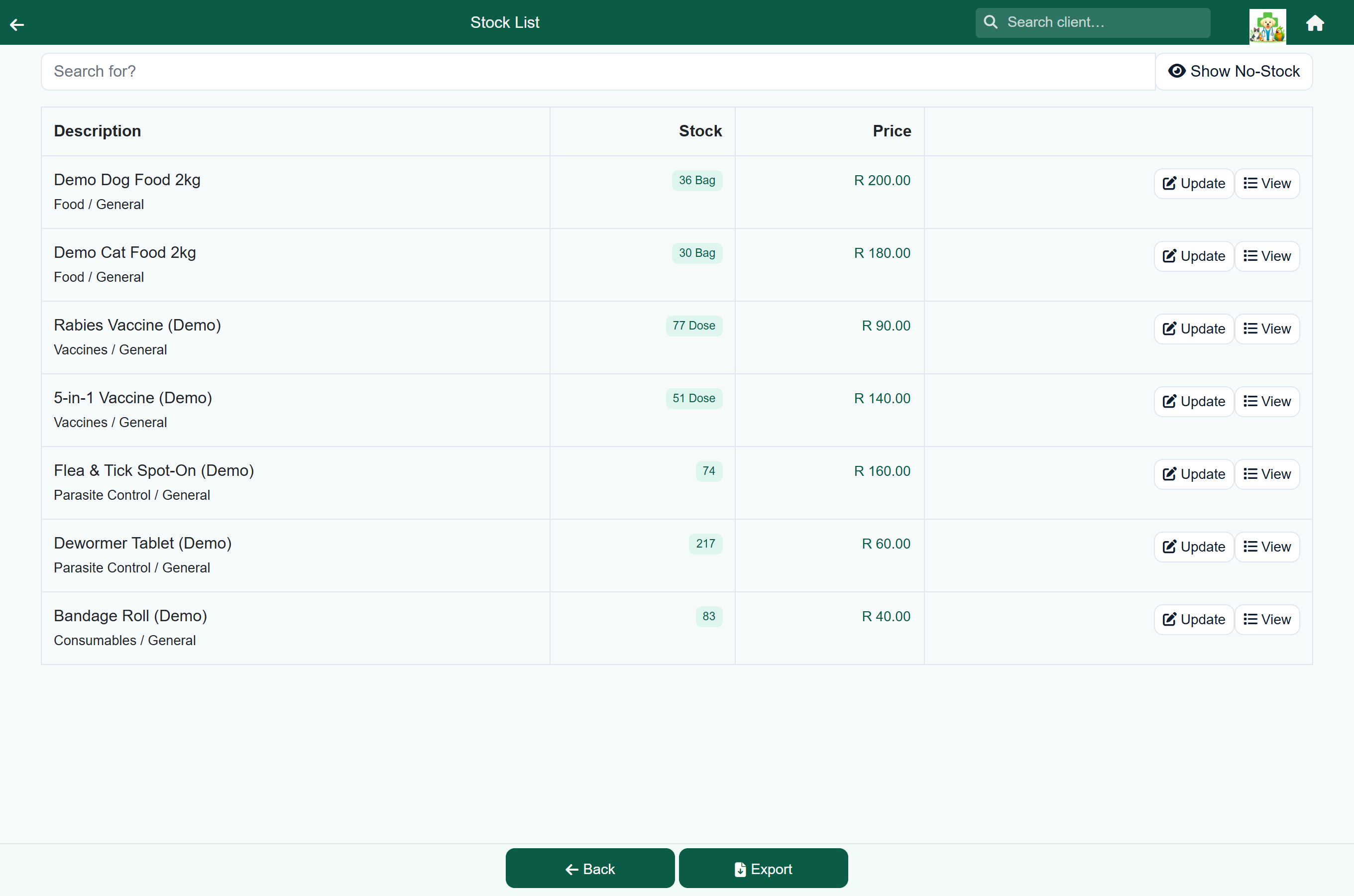
Every stocked item with its quantity on hand. Items that have run out or are running low are flagged. Tap an item (or View) to see its movement history, or Update to add or remove stock. Export in the footer sends the list to a spreadsheet.
To start tracking stock for a catalogue item, press Show No-Stock and then New Stock beside the item, or press New Stock on its row in the price list.
Receiving a delivery#
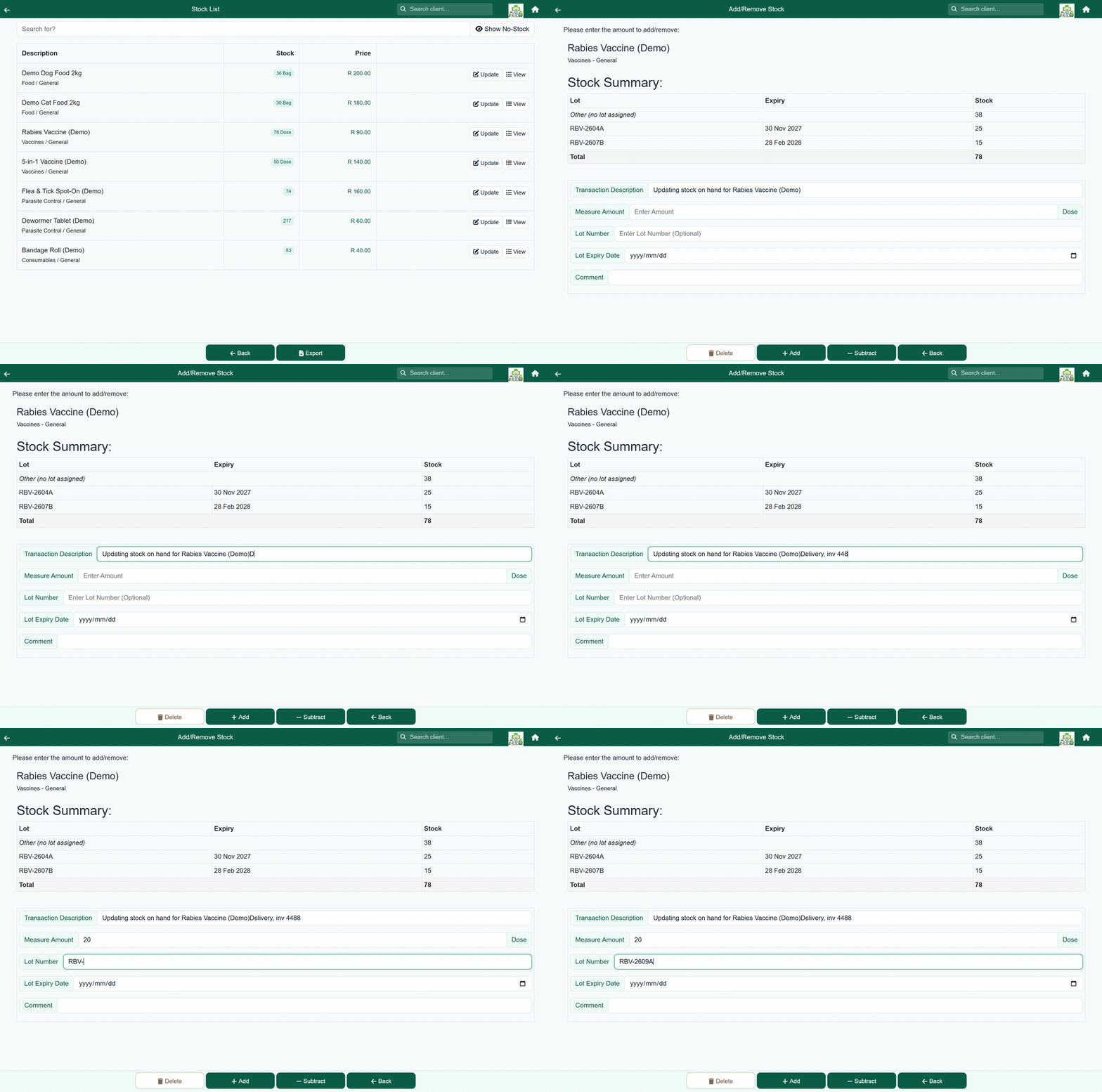
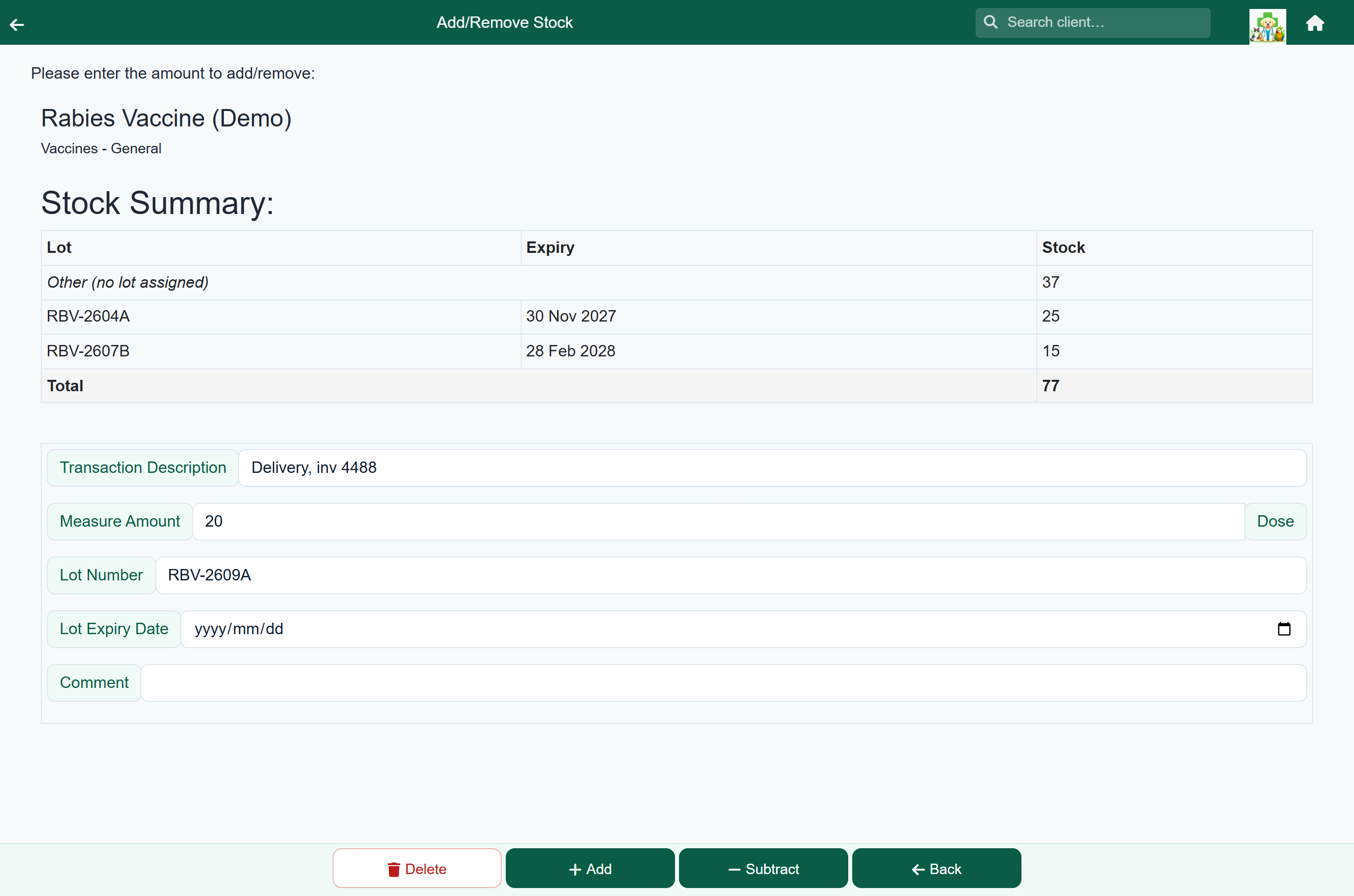
- Go to Stock & Prices → Manage Stock and press Update beside the item. The Add/Remove Stock screen opens, with the lots you already hold listed at the top.
- Type a Transaction Description — “Delivery, inv 4471”. This is what shows in the history.
- Enter the Measure Amount. Check the unit beside the box — millilitres, tablets, each.
- Enter the Lot Number and Lot Expiry Date if the product has them. Both are optional, but a lot with no expiry date cannot be watched for going out of date.
- Add a Comment if you need to.
- Press Add.
Lot numbers and expiry dates#
When you record a lot number, FastVet keeps a separate balance for each lot. The Stock Summary table at the top of the item shows each lot, its expiry date and how much is left.
When an item you hold in named lots is added to a consultation, a hospital or boarding day, a groom, a protocol or a sale, a Please select lot table appears under the quantity. Choose the lot you took it from, and the stock history records which batch the patient's dose came from.
Expiry is flagged, not enforced. An expired lot is struck through in the table and shows a red note once chosen; one expiring within 30 days shows an amber note. You can still save the line. The same flags appear on the Stock Summary table.
Adjusting a count#
Use the same screen to remove stock — for breakages, expiry, or to correct a count after a stock take. Enter the amount, say why in the Transaction Description, and press Subtract. To take it off a particular batch, also enter that batch’s Lot Number and Lot Expiry Date exactly as they were booked in.
Where stock went#
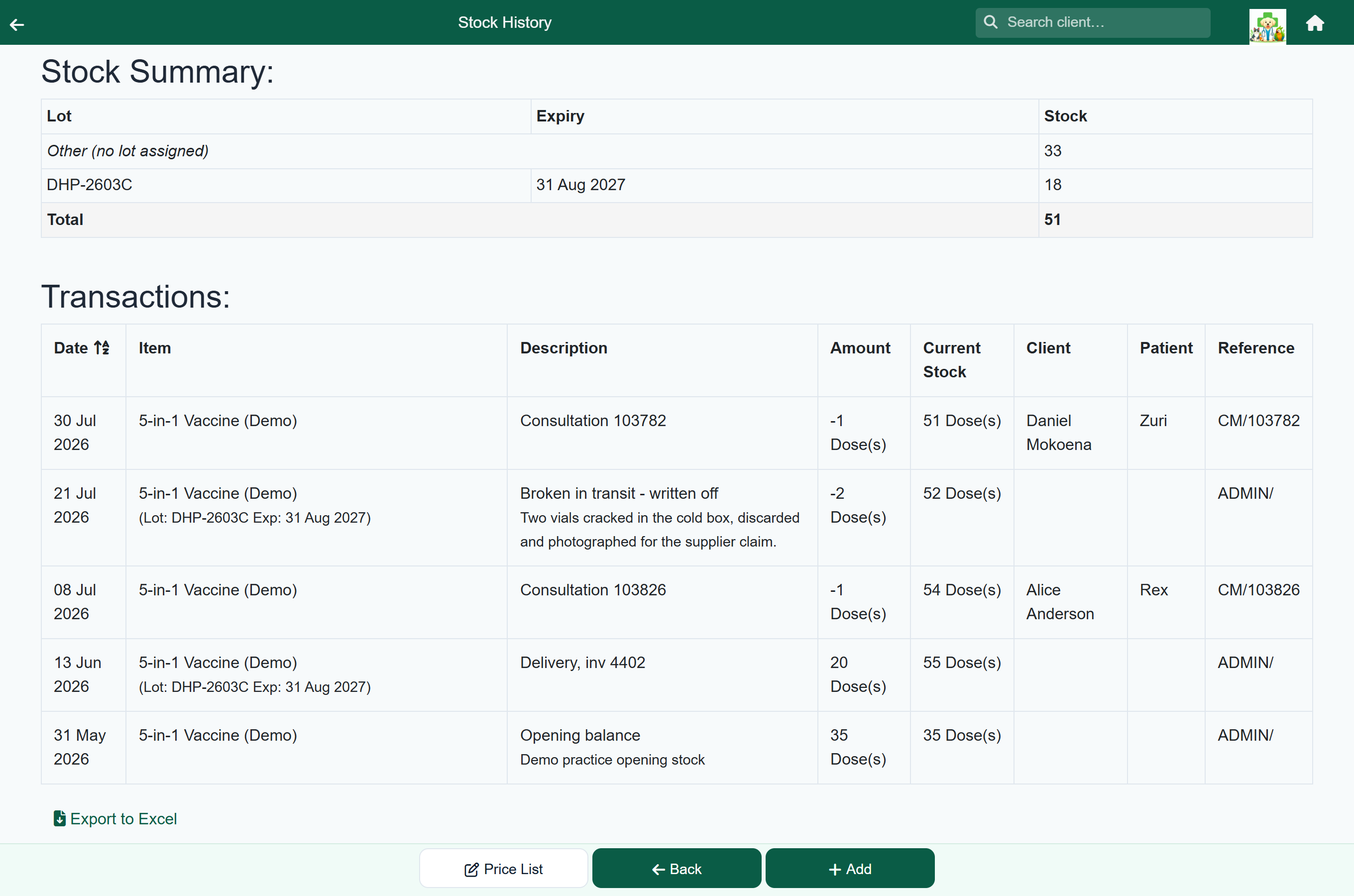
The history lists every movement for an item — deliveries, sales, items charged on consultations and hospital days, and manual adjustments — with the date, the description, the client and patient where there is one, and the stock balance after each movement (the Current Stock column, shown when the list is sorted by date). Export to Excel downloads it.
Suppliers#
Home›Settings›Suppliers
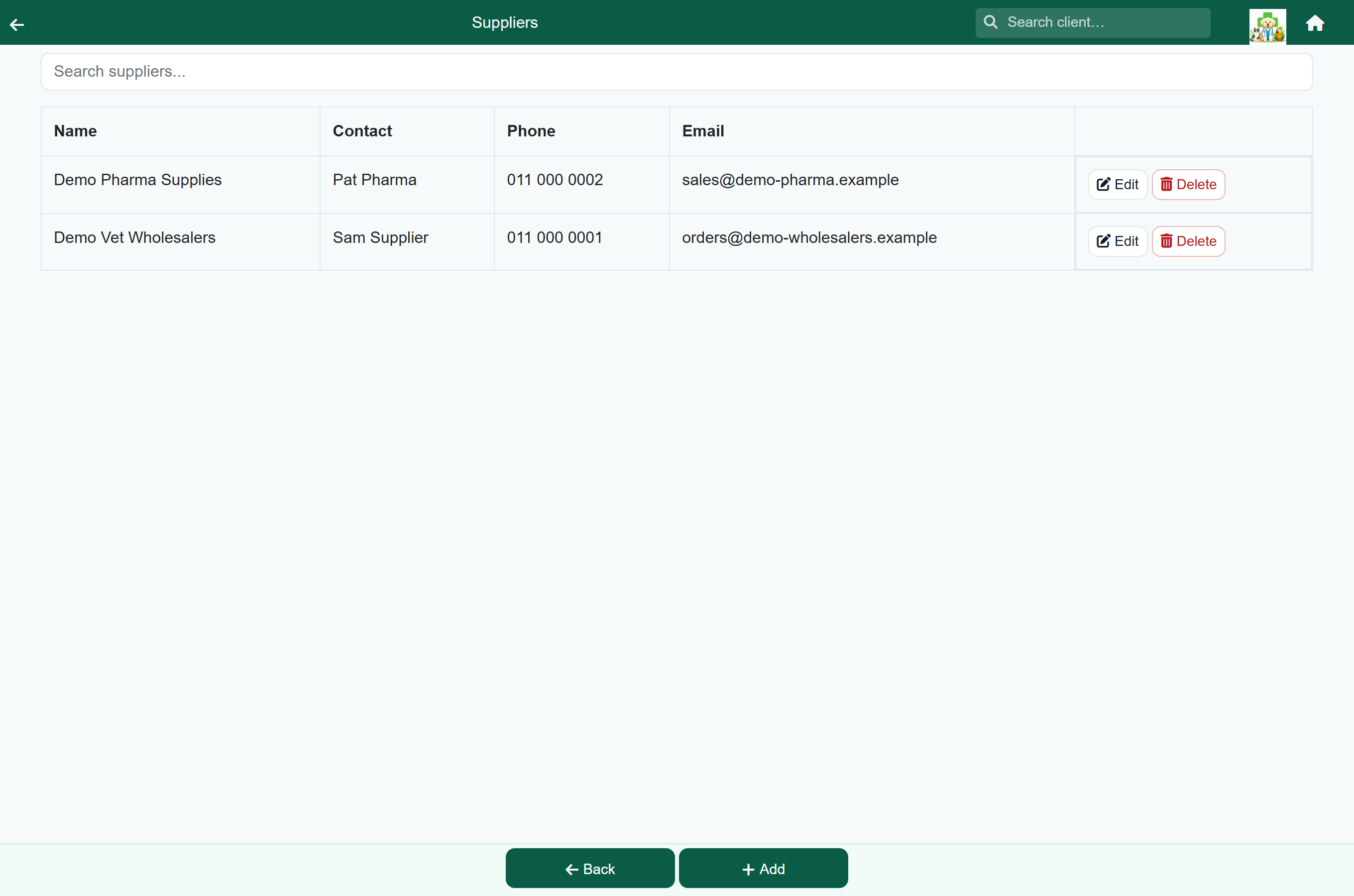
Add the companies you buy from here. You can then link items to them and send them purchase orders.
Saying who supplies an item#
Home›Stock & Prices›Update Prices
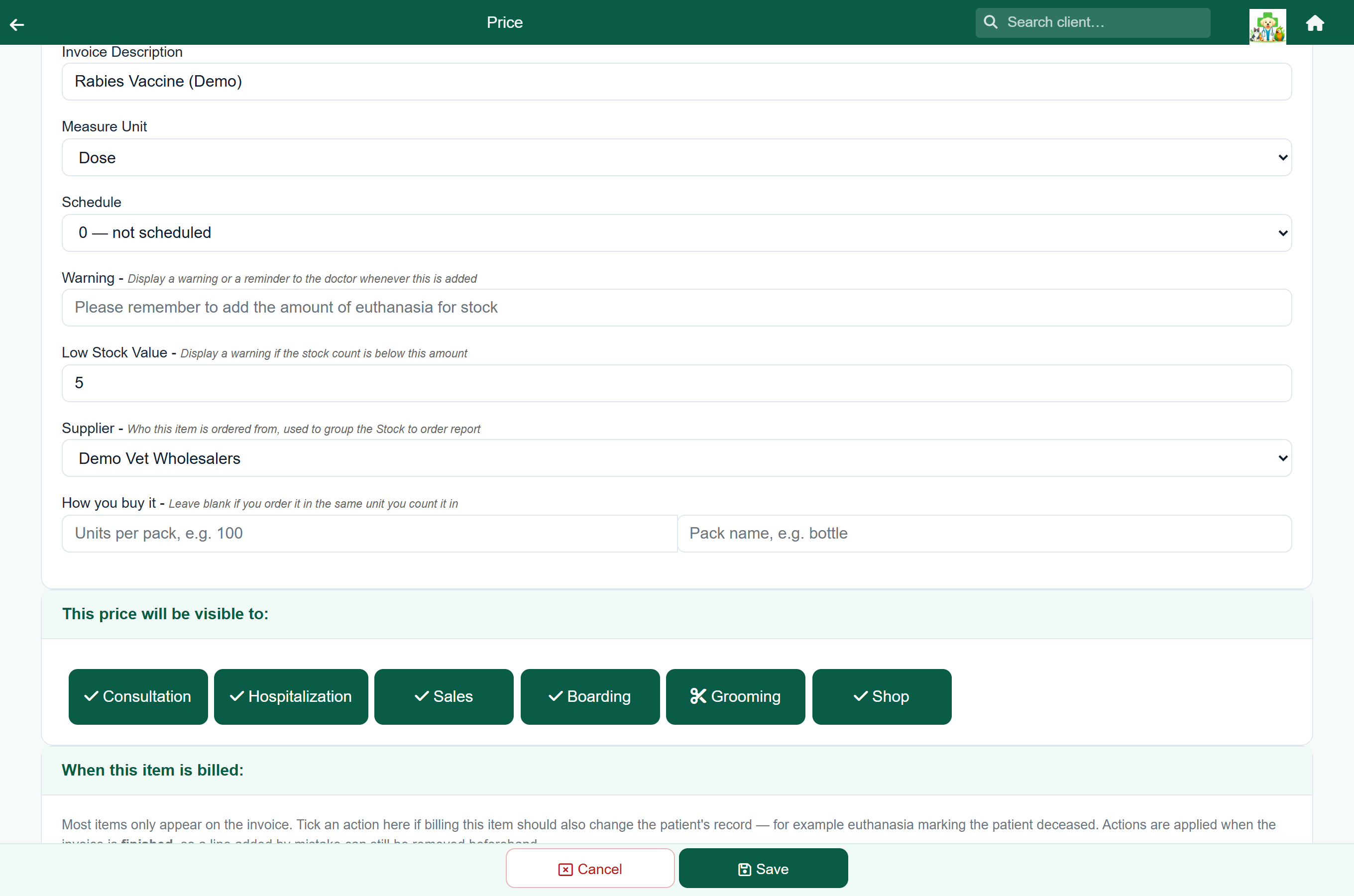
Recording who you buy an item from groups it under that supplier on the Stock to order report, and fills in the supplier when you place an order.
- Add your suppliers first, under Settings → Suppliers.
- Go to Stock & Prices → Update Prices and open the item.
- Choose the Supplier. Choose None to clear it.
- Press Save.
How you buy it#
Home›Stock & Prices›Update Prices
Some items are counted in one unit and bought in another — an anaesthetic counted in millilitres that comes in 100 ml bottles. Tell FastVet the pack size and the Stock to order report asks for 4 bottles rather than 350 ml.
- Open the item under Stock & Prices → Update Prices.
- Under How you buy it, enter how many counting units are in one pack, and what a pack is called — “100” and “bottle”.
- Press Save.
Setting suppliers and levels in bulk#
Home›Stock & Prices›Suppliers & levels
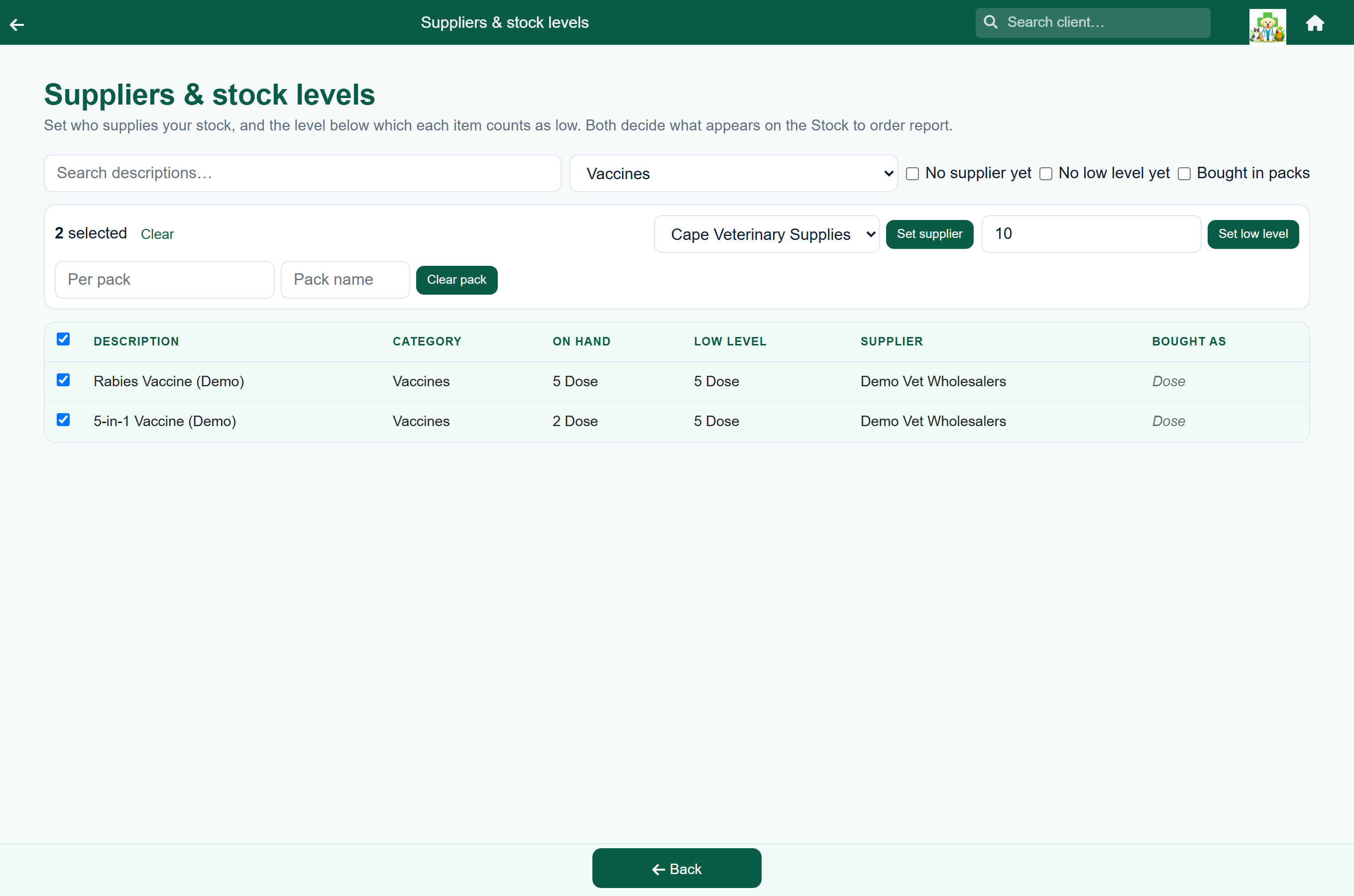
An item appears on the Stock to order report only when it has a low-stock level, and is grouped by its supplier. This screen sets either on as many items as you tick.
- Narrow the list: search, pick a category, or tick No supplier yet / No low level yet to see only what is missing.
- Tick the items you want — or the box in the table header to take everything shown.
- Choose a supplier and press Set supplier, type a number and press Set low level, or set the pack size with Set pack.
Ordering stock from a supplier#
Home›Stock & Prices›Purchase orders
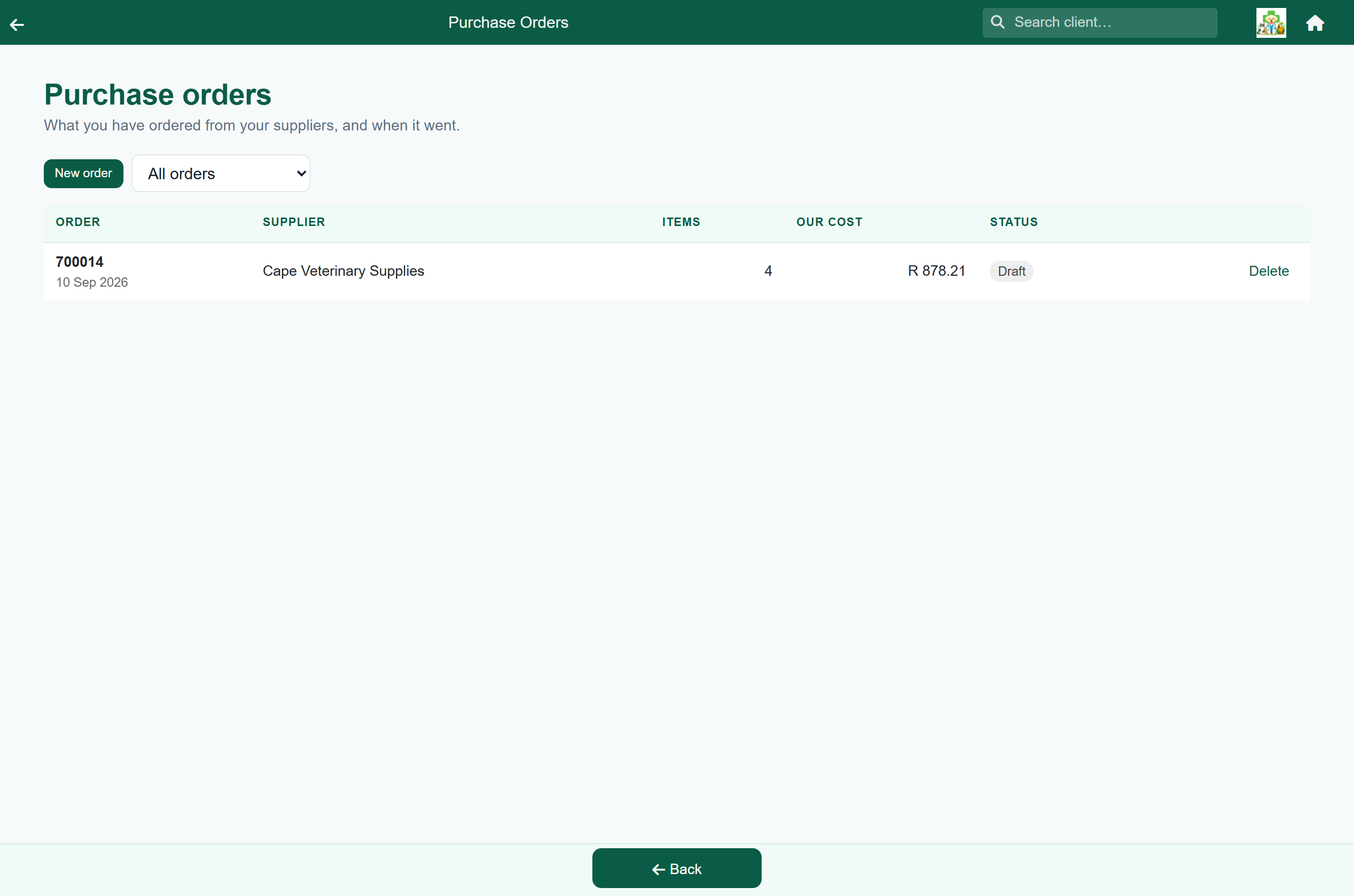
Tick what you need, choose the supplier, and FastVet emails them the items and quantities with a printable copy attached. The order is kept, so you can see later what was ordered, when, and where it was sent.
- Go to Stock & Prices → Purchase orders and press New order.
- The list shows everything at or below its low-stock level, with a suggested quantity. Tick what you want.
- Change any quantity you want to.
- Choose the supplier under Order from.
- Press Send, check the address you are shown, and press Yes, send it.
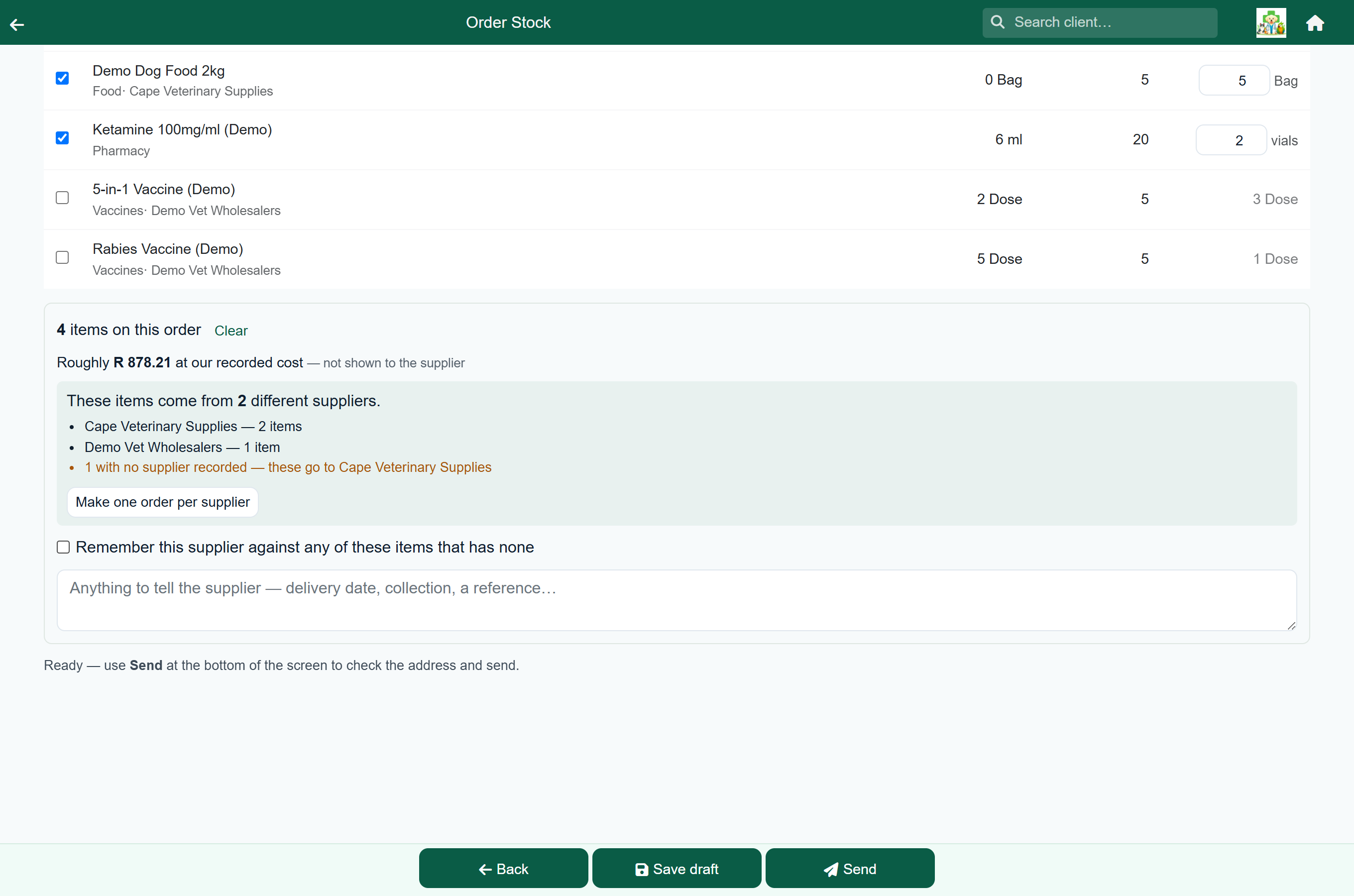
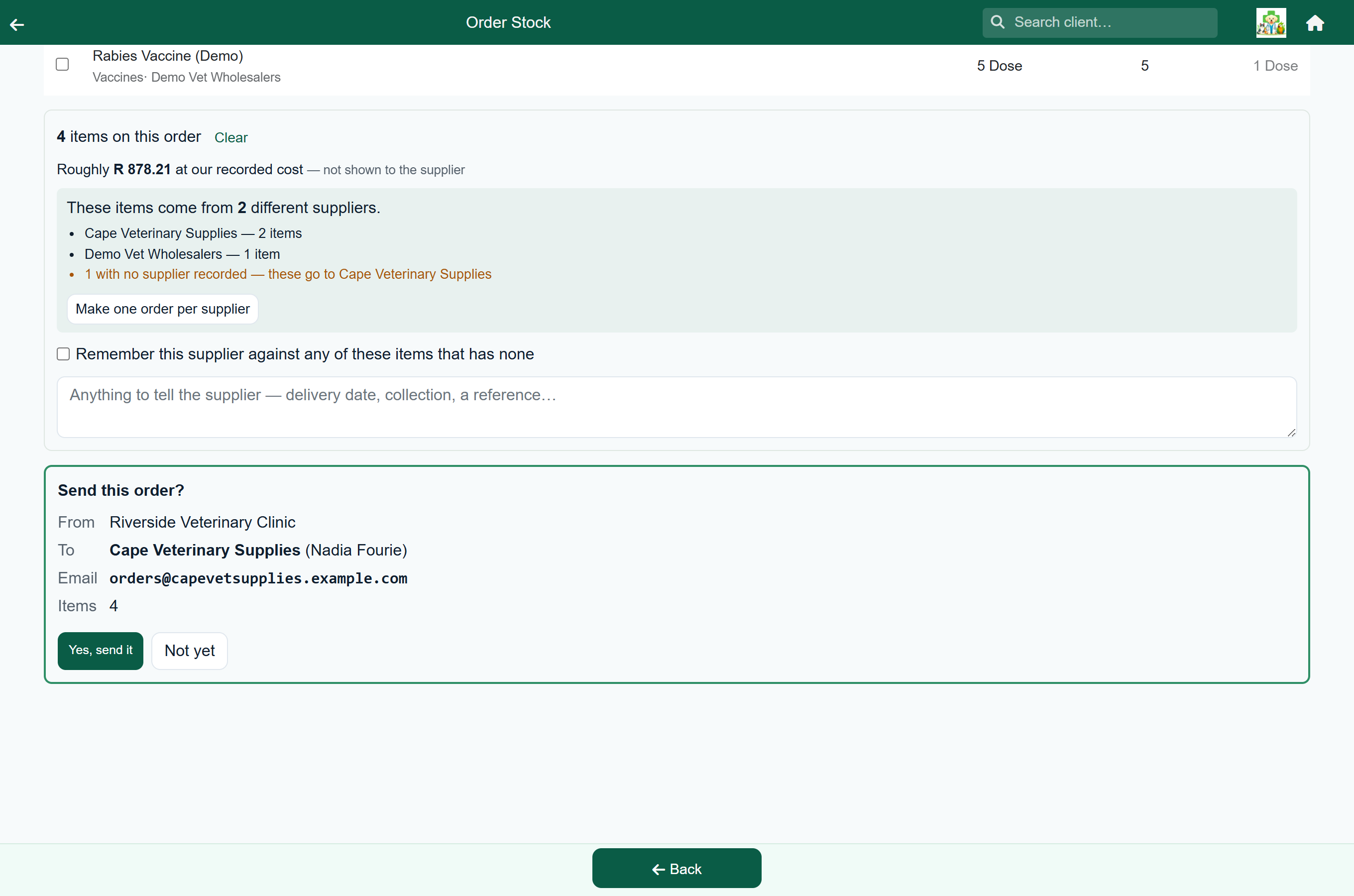
The supplier sees items and quantities only. The running total on your screen is your expected cost, from your own price list, and is not in the email.
Ordering from several suppliers. If the ticked items are recorded against different suppliers, the screen offers Make one order per supplier, which creates a separate draft for each. Items with no supplier go on the order for the supplier you chose.
Repeating an order. Press Repeat on a sent order to open a new draft with the same items and quantities. Check and change it before you send it.
Seeing what is on its way. The Stock to order report has an On order column for orders sent in the last two months. It is not subtracted from the suggested quantity, because FastVet does not know whether the delivery arrived — use it to judge for yourself.
Stock reporting#
| Report | Answers | Good to know |
|---|---|---|
| Stock used | What was dispensed over a period. | Counts only what went onto a patient. Counter sales, shop orders, deliveries and write-offs are not in it. |
| Stock value | What the shelves were worth on a chosen day. | Quantities are as at the close of that day, valued at today's costs and prices. A blank value means the item's price could not be matched; a negative count subtracts from the total. |
| Expiring stock | Which batches are near their expiry date, or past it. | One row per lot. Stock booked in without a lot number and expiry date does not appear. |
| Stock to order | What is low, how many to order, grouped by supplier. | An item with no low stock value does not appear. Items with no supplier are listed separately. |
| Schedule drugs | Controlled-drug movements, for your register. | Schedule 5 and above only, and only for items with a stock record. |
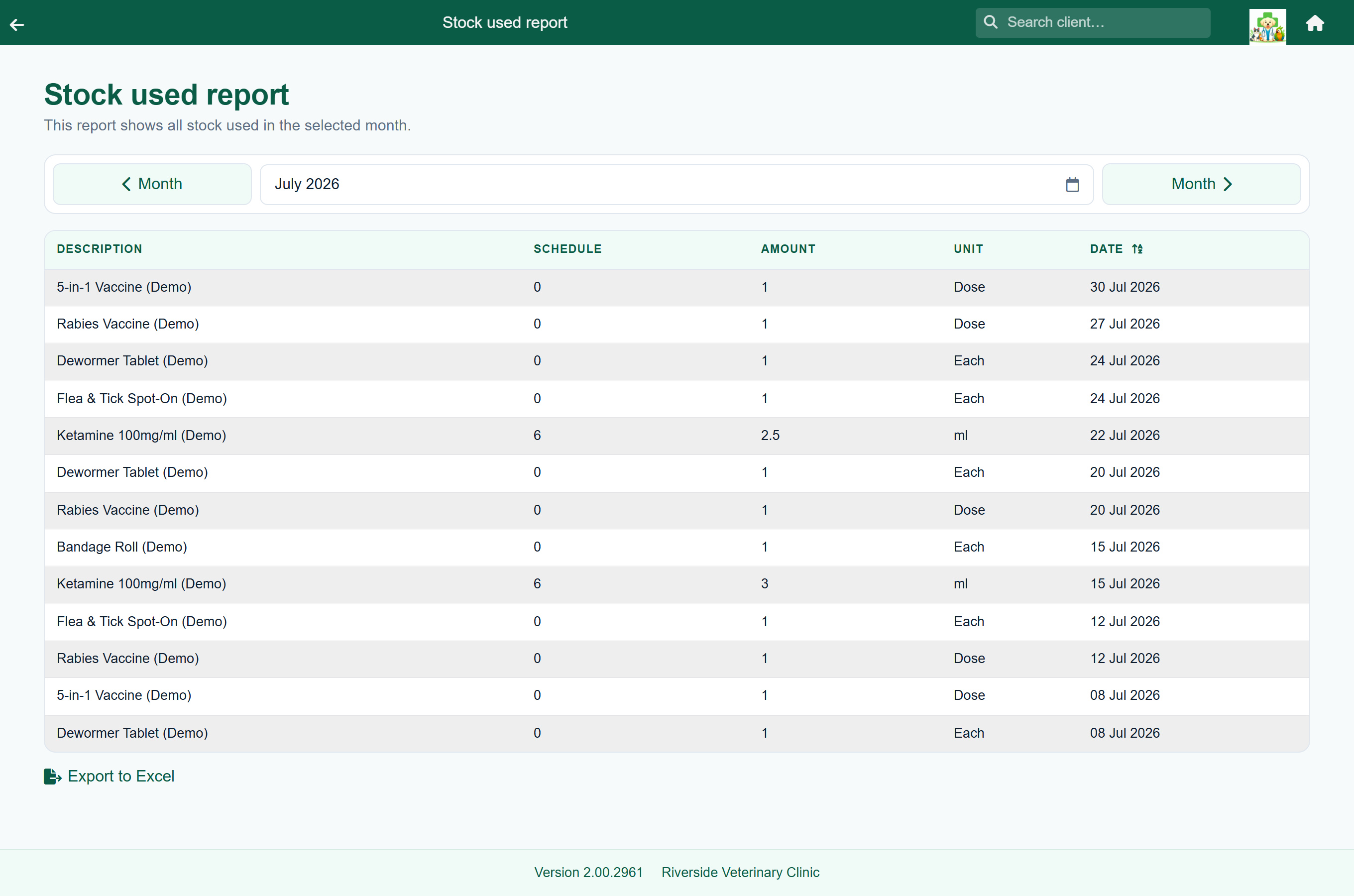
All of these are on the reports screen.
How stock and prices connect#
A catalogue item and its stock record are matched on the item's category, sub-category, description and unit.
Renaming an item under Update Prices is safe: FastVet updates the stock record to match and adds a Price List Change line to its stock history.
If the two ever disagree — usually after a catalogue import — the item shows no stock badge in the price picker and no value on the stock value report. To match them again:
- On Manage Stock, note the item's category and sub-category, shown under its description.
- Open the same item under Update Prices and make its category, sub-category, description and unit the same.
- Press Save. The badge and the valuation come back straight away.